Abbey Road Studios is known for the Beatles, but another story about the London building had been circulating among staff when the band first began recording there. Night guards reportedly saw a woman in white. Later accounts linked the figure to Edith Rosse, a former music-hall performer who lived in the house before it became a recording studio. The sightings remain folklore.
The first people said to have seen the woman at Abbey Road Studios were working a night shift. They weren’t making records or waiting for an autograph. Two guards, remembered by the surnames Smythe and Blyth, reportedly described a white figure in the building. Years later, recording engineer Ken Townsend helped preserve their story. The association with the Beatles gave it a famous address, though the musicians themselves had no known part in it.

The property at 3 Abbey Road began as a private home. Built in 1831, it contained nine bedrooms and stood in a part of London that would acquire a very different identity through music. Its conversion into a studio in 1931 left the recording rooms within a building whose life as a house was already a century old. In the version of the story that staff told, it was that earlier life which came back into view.
One of its previous residents was Edith Rosse, who had worked as a music-hall performer. She lived there with John Maundy Gregory. Historical accounts describe an arrangement whose nature has been told in different ways. To the people who later attached her name to the woman in white, the important detail was that a woman with a history of her own had actually lived at the address.

The darker part of the legend draws on suspicions about the circumstances of Rosse’s death. Historical accounts say she changed her will in Gregory’s favour and died shortly afterwards. Authorities ordered an exhumation, but the condition of her remains prevented a firm conclusion. The suspicions are part of the history of the case. What happened to Rosse cannot be established by the story the guards later told.
By the time those reports surfaced, Abbey Road Studios was a working building with a staff accustomed to people coming and going at different hours. Townsend, whose career there ran from 1950 to 1995, recounted what the night staff had reported. The story gained a name of its own, the White Lady, as it passed from accounts of an apparent sighting into the studio’s wider folklore.
Some versions say the figure vanished abruptly. Other episodes in the same tradition concern doors moving without an obvious explanation or the sudden smell of perfume in a room. They are separate tales, gathered together by years of retelling. Each gives an ordinary space in a workplace a second identity. By daylight a door has a room number and a purpose. In the story it is the thing a guard remembers hearing when he thought he was alone.

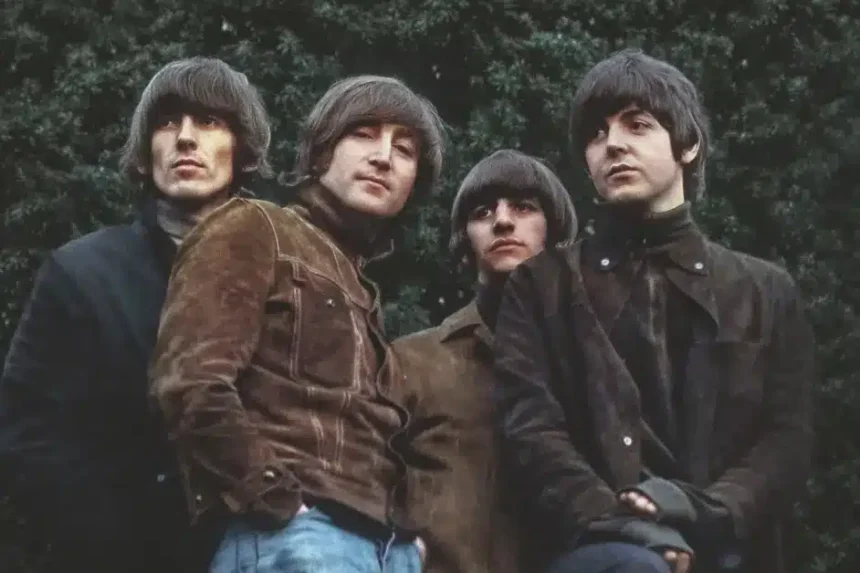
The Beatles spent much of their recording career at the address. They named the last album they recorded together after the street, and its cover sent generations of visitors to the crossing outside. That association explains why the story travels so easily. Plenty of people can picture the street before they have heard anything about the former home or the people who worked there overnight.
Other artists who recorded at Abbey Road Studios include Pink Floyd, Queen, Aretha Franklin and Kate Bush. Their work adds layer upon layer to the building’s public life. The guard story belongs to people who experienced it as a place of employment. Like recollections of recording sessions, it survived because somebody thought a detail of a working day, or in this case a working night, was worth passing on.
Abbey Road Studios revisited the tale for Halloween in October 2023. Its account drew on staff recollections and the building’s history, including Townsend’s testimony. That is how a story a visitor is now likely to encounter online moved beyond the people who originally told it. Each retelling gives new listeners a chance to know the house through something other than the photograph outside.

The history of the recording rooms and the legend of the former house work on different scales. The recording dates can be put into a session log. The dates of the house and its conversion can be traced. The White Lady survives in memories of what people said they saw. In that respect the distinction rests on the source of the story as much as on the figure at its centre.
The image that has endured is small compared with the famous one outside: a woman said to have crossed a corridor at Abbey Road Studios after dark. The guards had the building to themselves. If there was music to be made that night, the story has forgotten it. The names it kept were Smythe and Blyth.