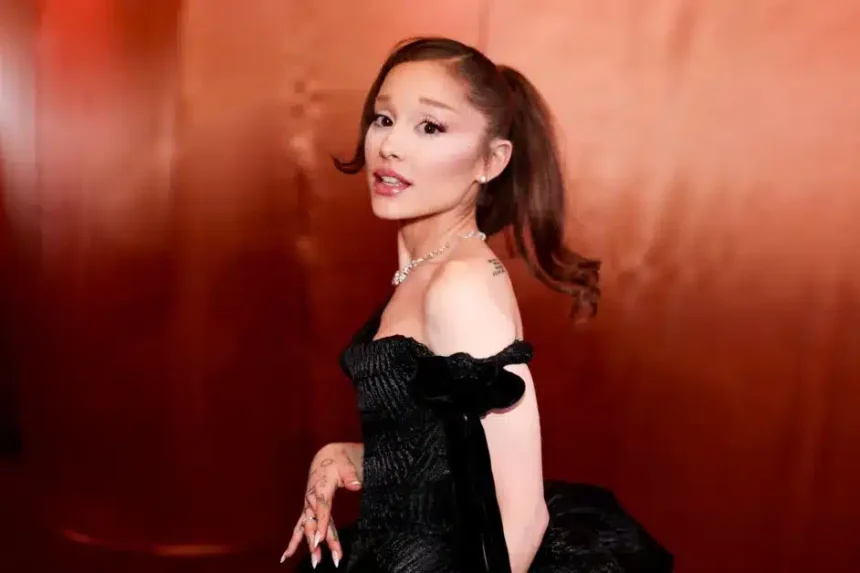
Ariana Grande helped turn “God Is a Woman” into a solo record after an earlier idea would have left room for a rapper. Producer Ilya Salmanzadeh recalled that the song had been considered for Beyoncé and JAY-Z before Grande developed it in the studio. She wrote verses and a pre-chorus and worked out the layers of harmony that helped define the recording.
As Ilya Salmanzadeh remembers it, Ariana Grande was initially going to sing the chorus of “God Is a Woman.” There was space in the arrangement for a rapper. Grande had a different idea for the space, and for the song. She wanted to write it for herself. By the end of the session the sections that once seemed available to another voice had become part of a performance built around hers.

Ilya told the story to songwriter Ross Golan on “And the Writer Is…,” in an episode released on October 13, 2026, as part of a longer interview about his work as a producer. The producer had worked with Grande enough by 2018 to know her habits in a session. His account tracks a succession of ideas about who might sing the song and ends with a decision made by the artist whose voice people now associate with it.
One of those ideas involved Beyoncé and JAY-Z. Ilya said the song had been considered for the couple while they were working on music together. The possibility went no further in his telling. Their joint album “Everything Is Love,” issued as the Carters, came out in June 2018. That places the proposed destination in the same period as the recordings that became Grande’s “Sweetener.”
Even with other names in circulation, Ilya remembered having Ariana Grande in mind early. The two had worked together on “Problem,” “Into You” and “No Tears Left to Cry.” He had heard how she made decisions about a melody and how quickly a single sung line might become an arrangement when she began to add harmonies. By the time this song reached her, the chorus was only a starting point.

Grande pushed for a solo version and got to work on the writing. Ilya recalled her tackling the verses, the section that leads into the chorus and the stacked vocals. The material had been under discussion in more than one form. The time spent in the studio with Grande gave it a structure that depended on where she wanted the voice to go from one section to the next.
Listen to the finished single and you can hear some of those decisions in the space behind Ariana Grande. The lead vocal keeps moving with the rhythm while voices gather around it. At points the harmonies sound close enough to answer her. Elsewhere they open out and give the line a greater reach. The arrangement lets her sound close to the listener before it fills a room.
That movement supports the theme of the lyrics. The narrator is direct about desire and the effect she expects to have. The religious imagery of the title gives that confidence a scale the words can play with. The voices piling up around the lead add their own suggestion of grandeur, while the phrasing keeps the performance grounded in the singer’s point of view.

“God Is a Woman” came out on July 13, 2018 and appeared on “Sweetener,” Ariana Grande’s fourth studio album. The single reached No. 8 on the Billboard Hot 100 and was certified four times platinum in the United States. Dave Meyers directed the video, which put her in cosmic settings and images drawn from classical art. Its scale made visual sense alongside the record’s play with intimacy and power.
Demo versions attributed to Camila Cabello and Rita Ora have circulated online. Their existence is a separate matter from the scenario Ilya recalled involving Beyoncé and JAY-Z. Recording ideas can pass through several rooms before an artist settles on the form a listener eventually learns. The fact available from Ilya’s account is where the writing went once Grande decided she would carry the song herself.

“Sweetener” contains another song with a separate Beyoncé connection. “R.E.M.” developed out of earlier Pharrell Williams material that had also passed through different versions. The two stories describe different paths. They sit together on the album because Ariana Grande took the material in front of her and found ways to sing it that made sense within the same record.
Golan’s conversation with Ilya ranged across the practical work of songwriting, including his time with Max Martin and the team in Stockholm. The example from Grande’s session comes down to a change in what the writers thought they were making. Ilya went in with room for another performer. What he remembered on the podcast was Ariana Grande deciding to write the missing sections herself, and the sound of the voices she built once she had done it.