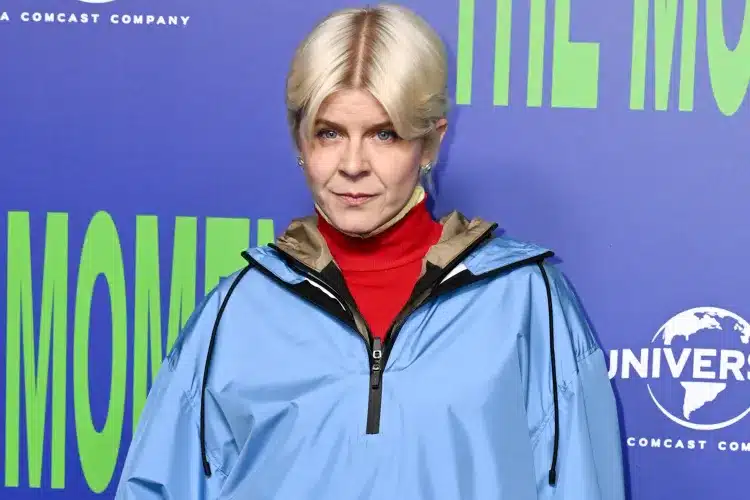
Robyn has delivered a harsh assessment of the Eurovision Song Contest, describing the modern competition as “embarrassing” during an appearance on Amy Poehler’s Good Hang podcast. In the episode released on November 10, 2026, the Swedish pop singer explained why she rarely watches the event, praised past winners ABBA and Carola, and recalled an amusing experience with a friend who covers his eyes during broadcasts. She also said watching Eurovision leaves her feeling unpleasantly overstimulated.
Robyn did not need much encouragement to share her opinion about Eurovision. When Amy Poehler brought up the international song contest during their conversation on Good Hang, the Swedish singer responded with an audible expression of discomfort before offering an unusually blunt assessment of the competition.
The exchange appeared in the November 10 episode of Poehler’s podcast, which explored several aspects of the musician’s life and career. Her Eurovision comments became a prominent talking point in the following days, particularly because they came from an artist whose home country has such a successful history in the contest.

The singer began by referring to ABBA, the Swedish quartet that won Eurovision in 1974 with “Waterloo.” Their victory is among the most recognizable moments in the event’s history, and the song helped launch a recording career that extended far beyond the competition.
For Robyn, ABBA represent an especially difficult standard to follow. She suggested that the group’s impact was one reason she has little interest in regularly watching Eurovision today. Her remark was delivered conversationally, as part of a personal comparison between different eras.
She also mentioned Carola Häggkvist, another singer with a prominent place in Sweden’s Eurovision history. Carola won the contest in 1991 with “Fångad av en stormvind,” having previously represented Sweden in 1983 and later returning in 2006.
Robyn described Carola as an excellent artist and said that she and Zara Larsson had grown up listening to her music. The reference highlighted a performer whose work had influenced Swedish pop singers beyond the Eurovision stage itself.

The tone then changed dramatically. Turning to the contemporary contest, Robyn used a blunt profanity to express her dislike before calling Eurovision embarrassing. She repeated the criticism, leaving little doubt about how uncomfortable she finds the program.
Her remarks were broad rather than specific. She did not identify a particular national entry, performer, performance or song responsible for her reaction, nor did she offer a detailed breakdown of the contest’s recent musical direction.
One of the funniest moments came when she described watching Eurovision with American friends. According to Robyn, a friend named Bert pulls a blanket over his eyes during the broadcast because he finds the spectacle so embarrassing.
The anecdote prompted laughter, but it also helped explain the singer’s reaction. The gesture of hiding behind a blanket captured the kind of secondhand embarrassment she associates with certain moments of the television event.
Robyn went further by describing how she feels once she has finished watching. She said the experience leaves her overstimulated in an unpleasant way, searching for words to describe her reaction before simply concluding that she does not like it.

That description suggests her criticism extends beyond individual musical performances. She was talking about her overall viewing experience, including the sensory effect of watching a large televised entertainment production.
It would be inaccurate, however, to interpret the comments as a claim that every contemporary Eurovision artist lacks musical ability. The singer made no such argument and did not attempt to evaluate individual entrants.
She also did not say that she had stopped watching the competition entirely. Her explanation was that she does not really follow it regularly, although she still occasionally watches with friends.
The comments are particularly striking given Sweden’s close association with Eurovision. The country has won the competition seven times, from ABBA’s breakthrough in 1974 to Loreen’s victory with “Tattoo” in 2023.
For generations of Swedish performers, the contest and its national selection process have offered opportunities to reach a substantial television audience. Its history includes established pop figures as well as artists who went on to develop wider international careers.

Robyn took a different route to international recognition. Through recordings such as “With Every Heartbeat” and “Dancing On My Own,” she built an influential pop career associated with electronic production and emotionally direct songwriting rather than competition appearances.
The singer’s comments should also be kept separate from the political disputes surrounding Eurovision in recent years. Although the contest has faced criticism related to international conflicts and the participation of certain countries, Robyn did not connect her remarks to those controversies.
The conversation moved on without her developing a broader argument about the event or its organizers. She did not announce any professional action involving Eurovision, and there was no suggestion that she was responding to a particular recent contestant.
What emerged instead was a candid personal reaction, built around memories of ABBA and Carola, a friend’s unusual viewing habit and an uncomfortable feeling after watching. For Robyn, the modern Eurovision experience simply does not hold the appeal of the musical figures she remembers admiring.