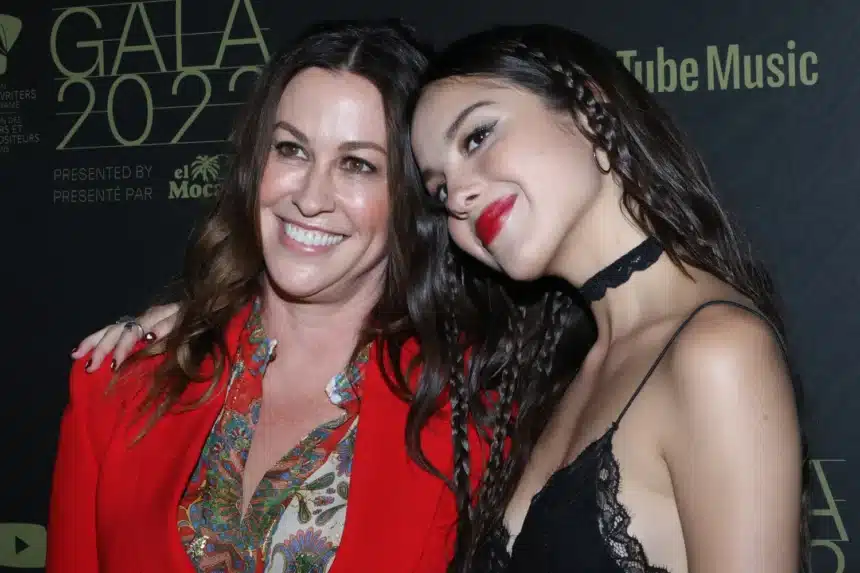
Olivia Rodrigo has built an international music career at twenty-three, but one ordinary experience still appeals to her: going to college. In an interview published on October 7, 2026, she spoke about returning to education, recalled the poetry class that inspired Lacy and imagined a different path her life might have taken. She has not announced an application, a degree program or an enrollment date.
Olivia Rodrigo has spent much of her adolescence and early adulthood moving between television sets, recording studios and concert stages. At twenty-three, she has an established catalog and international tours behind her. Yet sitting in a university classroom remains an experience she would like to explore, offering a form of ordinary student life that her early professional schedule did not allow.

In an interview published on October 7, she explained that education need not begin immediately after school. She questioned the assumption that university is something people must enter at around nineteen. For her, the interest in acquiring knowledge remains meaningful beyond that conventional timetable. Returning to study is an open possibility, rather than an opportunity she believes has permanently passed.
What attracts Olivia Rodrigo is not limited to obtaining a qualification. She described the simple appeal of sitting through a lecture and learning in a classroom. Such routines may be familiar to many people her age, but they represent experiences she has not fully shared. Her interest does not depend on announcing a new profession or deciding that her current career has reached its end.
Her education followed a different pattern because she began working as an actor while young. Home schooling made it possible to accommodate filming and other commitments, but it also separated much of her routine from conventional school life. That arrangement supported professional opportunities while leaving her curious about what it would feel like to learn within a more organized shared environment.

Before her international breakthrough in music, Olivia Rodrigo appeared in Bizaardvark and High School Musical: The Musical: The Series. Those productions brought acting, rehearsal and performance into years when many of her peers were following a more familiar school schedule. The jobs were important opportunities, but they also meant that the structure of adolescence was shaped by a working life already underway.
The release of Drivers License in January 2021 transformed that situation again. She was seventeen, shortly before turning eighteen, when the song reached No. 1 on the Billboard Hot 100 and attracted worldwide attention. SOUR followed in May with songs including Deja Vu, Good 4 U and Traitor, bringing more performances, awards and touring commitments as her recording career expanded.
That success arrived at an age when many people were choosing universities and courses. Olivia Rodrigo instead found herself managing the demands of a rapidly developing international career. Her curiosity about college therefore concerns a route she did not follow at the usual moment, rather than dissatisfaction with having become a musician. The two interests do not have to exclude one another.
She has already tried a limited form of university study. In 2022, she attended a poetry class at the University of Southern California. This was a particular course rather than enrollment in a complete degree program. She has described enjoying the experience of learning with a teacher and other students, giving her interest in future study a concrete basis in something she has experienced.

The class also left a direct mark on her music. Olivia Rodrigo wrote a poem called Lacy for an assignment and later developed it into a song. Instead of beginning with a melody or an idea formed during a recording session, she already had a written text she wanted to preserve and expand. The classroom exercise became material for a different creative process.
Lacy appeared on her second studio album, GUTS, in September 2023. It explores admiration, jealousy and comparison through a restrained performance and language shaped by its poetic beginning. She has discussed Sylvia Plath, particularly the poem Daddy, as an influence on the original writing. That connection helps explain why she remembers the course as more than a brief interruption to her professional routine.
The experience showed her another way into songwriting and strengthened an existing interest in literature. She has also named Leonard Cohen as an important influence on her relationship with written language. None of that establishes a chosen academic subject or a commitment to a particular institution. It describes the curiosity that could eventually guide further study when she decides how to pursue it.

She remains undecided about whether that would mean a full degree or individual classes suited to her interests and available time. Olivia Rodrigo has not said she has applied or fixed a starting date. Imagining life without the success of Drivers License, she suggested she might have attended college and perhaps worked for a nonprofit organization, a hypothetical alternative rather than a new job announcement.
Her current professional life already includes support for social causes, but she did not present university as something she must urgently reclaim. A lecture, another writing class or sustained study could all become part of a future routine. For now, the poem that became Lacy is the clearest example of learning feeding directly into her music, showing why the possibility continues to interest her.