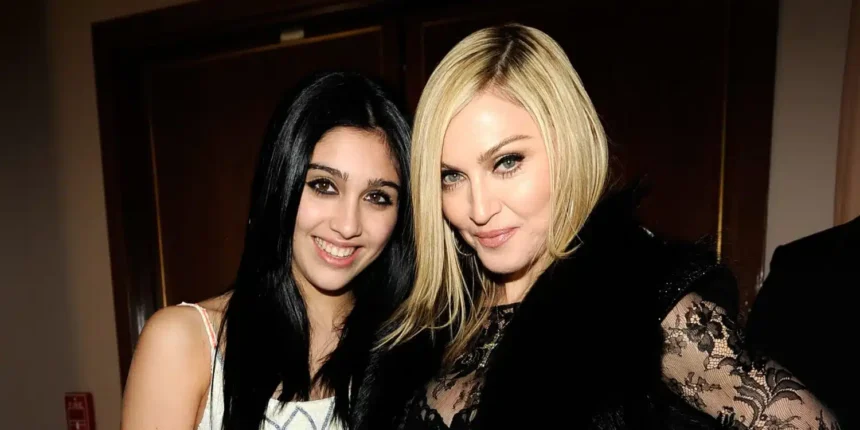
Madonna marked Lourdes Leon’s thirtieth birthday by recalling the day her daughter was born. In an Instagram tribute, she described an eighteen-hour labour and helicopters circling the hospital as television crews covered the birth. The post moved between those first hours and photographs from the years since, ending up in the same intimate territory as “Little Star,” the song Madonna wrote for her daughter.
The helicopters are the detail that makes Madonna’s account of October 14, 1996 hard to picture as an ordinary birth story. She was inside Good Samaritan Hospital in Los Angeles, where she had been in labour for eighteen hours. Outside, crews wanted a view of a building that contained one of the most closely followed pop stars in the world and the baby she had not yet taken home.

In the account she posted thirty years later, Madonna remembered the baby being in a difficult position and trouble with the heartbeat. She was telling her daughter what she remembered about a day of which the younger woman could have no memory herself. The tribute had begun with the thought that there were enough memories to fill a book. She chose to go back to the first one.
Lourdes Maria Ciccone Leon was born to Madonna and Carlos Leon. Even before the birth, the pregnancy had been a subject of international attention. The helicopters make that attention unusually literal. A television crew could show viewers that it was outside the hospital. From inside, the thing the mother wanted to know was whether her child would arrive safely. The birthday post gives the two experiences the same address.

That outside view was never going to answer the questions Madonna had about the hours she was living through. In her recollection, the labour and the noise above the building belong to different parts of one experience. Readers know the outcome because the post appeared on her daughter’s thirtieth birthday. The way she remembered the day still makes room for the uncertainty that preceded it.
The photographs begin to tell a different kind of story. Images from infancy sit alongside pictures of Lourdes as she grew up, and the adult is present in the series as someone who has an image of her own. For Madonna, the arrangement lets a great deal of time pass in a small space. She can go from explaining what happened at the hospital to addressing the person that child became.
Madonna used the word biblical for the depth of their bond. She also urged her daughter to remember who she was and where she came from. That advice lands differently next to the photos than it would in an account of the birth on its own. It is being given to a woman who can look back over those photographs and recognise a life she has made beyond the first one in the carousel.

One of the names in the tribute was “Little Star.” It has a particular history for listeners who came to Madonna through “Ray of Light,” released in 1998. The album contains a song of that name, made in the years immediately after she became a mother. The phrase can pass quickly in a caption. On the record, it is given a melody and the time it takes a singer to tell a child what she wishes for her.
The connection between the two versions of the phrase narrows the distance between the post and the album. In 1998 the words went out to listeners who could hear them as a song about a young child. This time Madonna was writing directly to the woman the song had been addressed to. The nickname made it possible to bring back part of that earlier voice without replaying the whole record.
Lourdes has since worked in fashion and made music under the name Lolahol. In 2022 she released “Lock&Key,” one of the early tracks she put out under that name. There are people who know her from those recordings or from fashion. The post sets those adult years beside a history that, for its first moments, could only be told to her by someone who was in the room.

That history also gives “Little Star” an unusual afterlife. It was part of an album heard by people who had no access to the domestic scene it describes. Three decades after the birth, Madonna could use its title as a private form of address in public again.
Madonna said she had too many memories to set them all down. The ones she selected give the thirtieth birthday a span from the hospital to the present. The early part belongs to a woman listening for news about her baby as the world looks for news about her. The words she uses at the other end are the ones she had already put into a song while the baby was still small.