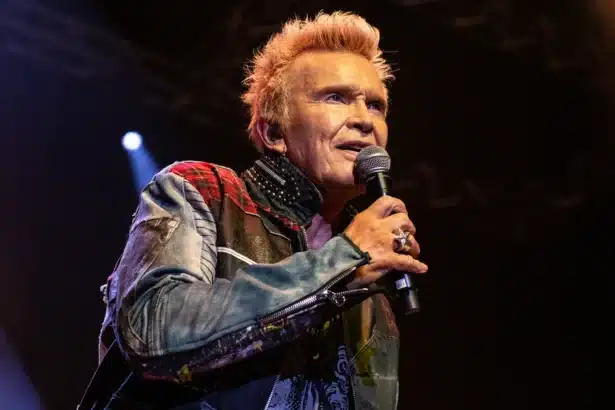
Neil Young has filed a new $10 million lawsuit against a political committee associated with Donald Trump, alleging that Rockin' in the Free World was played without permission at an Ohio rally. The October 26 complaint revives a dispute over the song's use that previously reached court in 2020. The musician also seeks an order preventing further unauthorized performances by the committee.
Neil Young has returned to federal court over the use of Rockin' in the Free World at a Donald Trump political rally. The musician filed his complaint in the Eastern District of Virginia on Monday, October 26, seeking $10 million in damages. He alleges that the song was played without the necessary permission at an event earlier in the month.
The named political organization is Trump 47 Committee Inc. Trump himself is not personally named as a defendant in the complaint. The filing identifies an October 12 gathering in Youngstown, Ohio, as a central incident, placing the dispute within the committee's activity supporting Republican candidates ahead of November's midterm elections rather than a new presidential election campaign.
According to the complaint, the song played as Trump approached the stage. Neil Young says he had not authorized that public performance and would not have granted the committee permission. The claim is therefore framed as alleged copyright infringement, not simply as an expression of the musician's disagreement with the president's political positions or his preference about the event's soundtrack.
The same song was part of an earlier dispute in 2020, when Young sued Trump's then-presidential campaign over the use of his music at rallies. That case ended without a public judgment resolving the underlying infringement arguments. In the new filing, the musician describes the earlier matter as having been settled shortly after the campaign received the complaint.

Neil Young alleges that the previous campaign promised not to use Rockin' in the Free World again without a license and his consent. The full terms of that arrangement have not been made public. His description is an assertion in the new lawsuit and should not be confused with independent confirmation of every condition included in the earlier agreement.
There is also a distinction between the organizations involved. The campaign entity named in 2020 is not the same legal corporation as Trump 47 Committee, which faces the new claim. Whether any earlier undertaking has consequences for the present defendant requires examination of the relevant evidence and legal relationships. The complaint's reference to the settlement does not resolve that issue by itself.
The $10 million figure is the amount Neil Young is requesting; it is not an award already made by a court. He also seeks an injunction against further unauthorized use of his compositions by the committee. No ruling in the new action has established infringement, and filing a lawsuit is the beginning of that process rather than a finding of liability.
His lawyers also discuss the meaning of Rockin' in the Free World in their arguments. They describe a contrast between public rhetoric about American freedom and the experiences of people facing poverty, homelessness and exclusion. Their position is that using the recording at Trump's events conflicts with the message they identify in the song and risks misrepresenting its creator.

Released in 1989 on Freedom, the composition pairs an emphatic guitar-driven sound and a repeated chorus with lyrics describing serious social problems. Its apparently celebratory refrain sits against images of hardship. That tension helps explain why the song's political meaning is part of the complaint, even though the legal question about authorization cannot be settled solely by interpreting its message.
For Neil Young, the disagreement also concerns the impression an audience could take from hearing his work at a political event. His lawyers allege potential harm to his reputation and public identity through an implied endorsement. That is a claim about the consequences of the disputed performance, not proof that a particular financial or professional loss has already been established.
Music licensing at political gatherings has repeatedly created conflict between performers and campaign organizations. Public-performance licenses can involve rights-management bodies and different categories of event. Establishing what a particular authorization covers requires examining its terms and the use in question. An assumption about a general license cannot substitute for evidence about the specific performance alleged in this complaint.
The committee will have an opportunity to present its own position and any relevant information about the rally and its music permissions. Neil Young's case seeks to establish both that authorization was absent and that those responsible knew of his objections. At this stage, those are matters he must support through the proceedings, rather than conclusions reached by the court.

Other musicians have also objected publicly or taken legal action over political uses of their songs. In 2024, the White Stripes brought a case involving Seven Nation Army, while the estate of Isaac Hayes pursued a separate dispute over Hold On, I'm Coming. Different circumstances and licensing arrangements mean those cases cannot determine the outcome of Young's new claim.
The earlier 2020 dispute remains a distinctive part of the latest filing, but the present case centers on the alleged October 12 use and the current committee's responsibilities. Neil Young is asking for compensation and protection against future unapproved performances. The licensing position, the significance of the previous arrangement and the arguments on both sides remain for the court to examine.