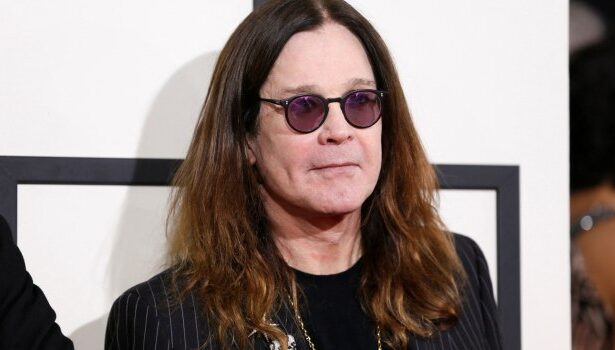
Billy Idol visited Griffiths Middle School in California on October 22, where the school band welcomed him with Rebel Yell. The singer discussed his early musical experiences as part of a Rock & Roll Hall of Fame Foundation and Save The Music initiative. The partnership aims to establish at least twenty-five school music programs over three years, with instruments and educational opportunities at its center.
Rebel Yell found an unusual setting when Billy Idol visited Griffiths Middle School in Downey, California, on October 22. Students played the 1983 song for its original singer as part of a gathering focused on music education. The encounter connected a familiar rock recording with young musicians still learning their instruments, placing the school band at the center of a wider initiative.
Representatives of the Rock & Roll Hall of Fame Foundation and Save The Music accompanied the singer. Their partnership is designed to give more public-school students access to instruments and organized teaching. A welcome prepared by the band made that practical aim visible, turning a piece of his catalog into something the students could perform together within their normal learning environment.
The organizers confirmed the students' performance, while reports also described the singer joining them. The event's main purpose remained the visit and conversation rather than a full concert staged at the school. For an artist whose career began in Britain's punk scene, hearing a recording more than forty years old interpreted by students created a different setting from the large venues where it is usually played.
Billy Idol then spoke with the children about the beginning of his career and the challenges he encountered before becoming established. He returned to the period when buying records and seeing performances required finding his own money. Those details brought the discussion back to being a young listener, before the international success that made his stage persona recognizable.
He recalled delivering newspapers at weekends while attending school in England. The income helped him buy records and concert tickets, giving him access to the music he wanted to hear. Those experiences were an early connection with a world he would later enter professionally. His account emphasized discovery and enthusiasm rather than presenting his career as a predetermined route from school to success.
For Billy Idol, rock music provided a place where he felt he belonged and could express himself. Seeing the band at Griffiths brought that early discovery back to mind. Billy Idol argued that every student should have an opportunity to explore what an instrument can make possible, linking his own memories with the partnership's aim of widening access to music education.
The initiative plans to fund at least twenty-five new music programs over the next three years. Instruments, equipment and teaching opportunities are intended to reach more public schools, particularly where resources are limited. That is a future target for the partnership, rather than a claim that all twenty-five programs had already been established by the time of the California visit.
Artist participation is another element of the plan. Visits and discussions allow students to meet musicians associated with rock history and hear about different paths into creative work. The intention is to place those personal accounts alongside practical support for learning, giving students an encounter with a working artist while helping schools develop the resources needed for regular lessons.

The event also included a specific commitment to neighboring Doty Middle School. It is due to receive a $55,000 grant in 2027 for new band instruments. Billy Idol visited Griffiths, but the announced financial support concerns Doty, another school in the same district. Keeping those locations separate identifies where the gathering occurred and where the forthcoming grant is intended to go.
For a school band, available instruments are a necessary foundation for lessons and group rehearsals. The announcement therefore addresses an identifiable part of running a program, rather than only providing a public appearance. The $55,000 remains a scheduled 2027 commitment, distinct from money already delivered during the October event or support previously received by the host school.
John Sykes, chair of the Rock & Roll Hall of Fame Foundation and founder of Save The Music, also took part. The new collaboration builds on the latter organization's work supplying instruments and technology to schools. Billy Idol's involvement gives that practical support a connection with a performer selected for the Rock Hall's Class of 2026, whose induction ceremony had not yet occurred at the time.

Before his solo career, the singer was part of Generation X in the late-1970s British punk movement. Moving to New York in the early 1980s opened another phase, with his 1982 self-titled album including White Wedding and Hot in the City. Work with guitarist Steve Stevens helped create the combination of rock guitar, punk influence and pop immediacy associated with his subsequent recordings.
Rebel Yell followed in 1983, alongside album tracks Eyes Without a Face and Flesh for Fantasy. Hearing students play the title song gave that history a new context. Billy Idol encountered a familiar composition through musicians practicing shared rhythm, listening to other instruments and adjusting their own parts within an ensemble, the everyday work that takes place behind a school-band performance.
The visit was one of the early public activities of the partnership, with the three-year program target and Doty's grant supplying its next concrete steps. For the singer, the conversation returned to an earlier personal discovery: wanting records and concert experiences before knowing where music might lead. The students' welcome gave that memory a present-day setting, with their instruments and their performance of Rebel Yell.