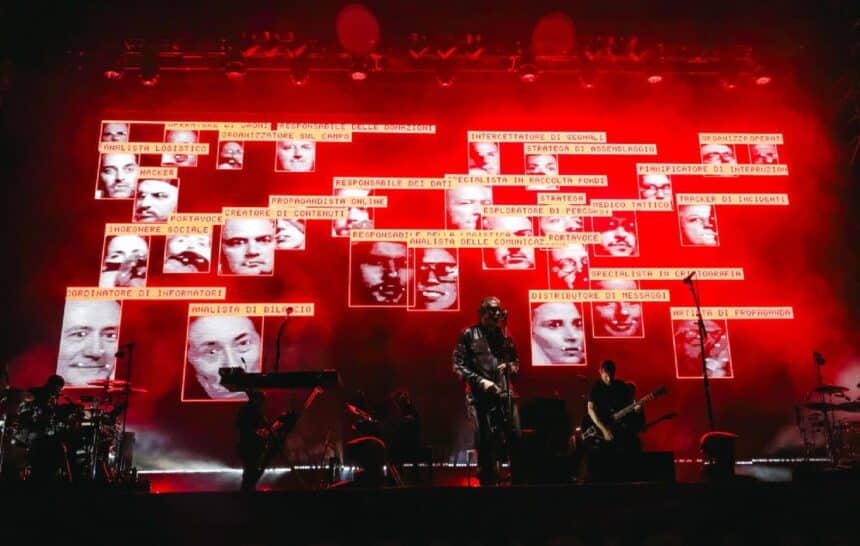
“Life Support”, Daniele Rugo’s documentary following health workers in Gaza, has released its official soundtrack. Massive Attack’s Robert Del Naja curates the music with the film’s producers and contributes original compositions to a 13-track collection featuring Kneecap, Paul Weller, Yasmine Hamdan and 47Soul. Digital availability began October 28, 2026, while a collectors’ vinyl edition will direct profits to Health Workers 4 Palestine.
Massive Attack’s Robert Del Naja has helped assemble music accompanying the testimony and hospital footage in “Life Support”. Daniele Rugo’s documentary follows doctors and other health workers who worked in Gaza, recording their experiences in hospitals and care settings. Its soundtrack arrived on October 28, bringing 13 tracks from different musical backgrounds together around the film’s subject.

Del Naja, also known as 3D, curated the collection with the producers. He contributed three original pieces and remixed a Kneecap song, while other composers and performers supplied their own work. The result is a collaborative soundtrack, rather than a new Massive Attack album or a cycle written entirely by one musician and issued under the band’s name.
The documentary draws on approximately two years of experiences from its group of health workers. Their accounts and hospital images describe care affected by military operations, destruction and shortages of essential supplies. The filmmakers regard them as important eyewitnesses, particularly given restrictions on independent access for international journalists, placing the workers’ direct observations at the centre of the narrative.
Denise Gough, known from “Andor”, narrates the film. Rugo uses recordings by the doctors themselves alongside footage from local camera operators. The production’s own description calls the events it examines a systematic genocide. That wording belongs to the filmmakers’ account and is not presented here as an independent judicial conclusion reached through the soundtrack release.

For the Massive Attack musician, composing for such material brought a demanding responsibility. Del Naja described feeling humbled by the invitation and wanting to strengthen the viewing experience. He acknowledged that music could approach only indirectly what volunteer doctors and civilians had experienced, while referring to the human resilience he felt emerged from their accounts.
Rugo described a difficult balance between adding emotional depth and leaving the testimony unobscured. The music was intended to support people speaking on screen, rather than compete with them or become a separate spectacle. That approach shaped the collaboration with Del Naja and the other contributors, keeping the soundtrack linked to the documentary’s human focus.
One contribution is Kneecap and Fawzi’s “Palestine” in a 3D remix. Del Naja’s treatment gives the recording a specific place within the collection, connecting the Irish group’s work with his musical intervention. Their broader public support for Palestinians supplies context, but the soundtrack credit concerns this particular version rather than a newly announced joint album with Massive Attack.
3D’s three compositions are “Explosives Of The Future”, “Perfect Victims” and “House Of Healing”. They form his original contribution beyond the remix. The collection places those electronic works among songs and compositions from several scenes, allowing different kinds of music to accompany the film without treating every track as the product of the same recording process.

“Resistance In The Dark” by The Five Techniques includes Paul Weller, David Holmes and Róisín El Cherif. The recording brings together musicians with backgrounds spanning British rock and soul through electronic production. Weller’s appearance belongs to this collective track, rather than a separate solo song supplied under his own name as the soundtrack’s sole featured performer.
Yasmine Hamdan contributes “Thirteen Kilometres”, while 47Soul appear with “Ya Kho”. Their work adds further voices and musical approaches, including Arabic vocal elements and Palestinian rhythmic and electronic influences. Alongside Massive Attack’s Del Naja and the other contributors, those selections broaden the soundtrack’s field while remaining connected through the documentary rather than one shared genre.
Habib Shehada Hanna has three pieces in the programme: “Sleeping Is A Privilege”, “Missing” and “Gaza Gaza”. The other selections include Siba and Monkyman’s “Dounana”, Massar Egbari’s “Ana Mawgoud” and Aar Maanta’s “Sahnuuni”. Together with the original compositions and remix, they complete the collection’s varied approach to supporting the film’s accounts.
“Life Support” had its world premiere at Sheffield DocFest in June 2026, before cinema screenings and on-demand availability. The soundtrack therefore arrives as a separate release accompanying an already presented film. It allows the music to be heard independently, while retaining the connection between the pieces and the hospital experiences around which the documentary was organised.

The digital album is available now, with pre-orders opened through Battle Box for a collectors’ vinyl edition. According to the announcement, all profits from vinyl sales will go to Health Workers 4 Palestine, linking the physical release with support for health professionals and access to care. No final sum raised has been announced, and the available digital release is distinct from that physical-edition arrangement.
For the Massive Attack collaborator and the wider team, music remains tied to the testimony rather than replacing it. The 13-track release offers an independent listening experience built from original film compositions, selected songs, guest contributions and the Kneecap remix, while the benefit vinyl gives the project an additional practical purpose whose eventual financial outcome remains unpublished. The project continues Del Naja’s publicly expressed interest in Palestinian issues.