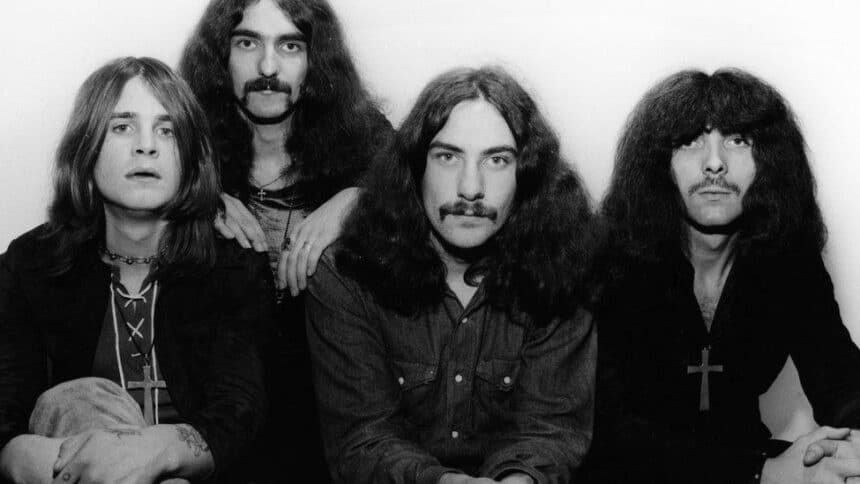
Tony Iommi has recalled how recording Black Sabbath’s “13” helped him psychologically while he underwent treatment for non-Hodgkin lymphoma. Diagnosed in 2012, he continued working on the album around medical appointments, travelling between Britain and Los Angeles. In a new interview, the guitarist describes music as a source of purpose and concentration, while explaining why his present studio routine gives him much greater flexibility.
Tony Iommi revisits the overlap between a serious illness and a major recording project in a new conversation with Krishnan Guru-Murthy on “Ways to Change the World”. His cancer diagnosis arrived while Black Sabbath were developing “13”, their final studio album. Continuing to write and play gave him something familiar to concentrate on while the rest of his daily life changed around treatment.

Doctors diagnosed non-Hodgkin lymphoma in 2012. At the same time, the band was preparing a studio return with Ozzy Osbourne singing alongside Iommi and Geezer Butler. Tony Iommi wanted to stay involved rather than abandon the project altogether. Doing so required adapting the recording timetable to the medical care he needed, instead of treating the album as an obligation unaffected by his condition.
Tony Iommi speaks about mortality with the dry humour familiar from his interviews, acknowledging that he still thinks about how long he might have. Creativity offers an interest beyond that uncertainty. He does not describe music as a cure or suggest it replaced treatment; his account concerns the psychological value of having work he wanted to do and could still enjoy.
The practical arrangements involved repeated travel between Britain and the United States. Recording took place in Los Angeles with producer Rick Rubin, while treatment appointments required him to return home. When able, he travelled back to continue the sessions. That movement between hospital care and studio work became one of the defining features of his experience making the record.

The schedule was demanding, but playing allowed him to direct attention towards guitar parts, new compositions and arrangements rather than remain focused only on illness. Tony Iommi describes the satisfaction of being occupied with something he had loved for decades. The familiar activity provided personal support alongside the clinical treatment, giving part of his week a purpose separate from medical uncertainty.
The project also mattered because of the musicians involved. Osbourne’s return to a Black Sabbath studio album connected the new writing with the voice that helped establish the original band. Working together required decisions about material and performance, not simply looking back at their earlier success. Those concrete tasks supplied something the guitarist could keep developing during a difficult period.
“13” appeared in June 2013 with Brad Wilk playing drums alongside Osbourne, Butler and Iommi. Songs included “God Is Dead?”, “End of the Beginning” and “Loner”, retaining the heavy guitar figures and dark atmosphere associated with the group. Its completion preserved the results of sessions carried out despite the disruption created by the guitarist’s treatment and travel commitments.
Tony Iommi’s relationship with the instrument had already required adaptation much earlier in his life. A workplace accident cost him the tips of two fingers on his right hand, creating a major obstacle to playing. He developed protective fingertip aids and changed his approach to the guitar. Those adjustments became part of a distinctive technique that influenced generations of heavy-music players.

That earlier experience is not the same as cancer treatment, but it helps explain the importance of continuing to create. Guitar playing was central to his identity as well as his profession. From the first Black Sabbath recordings to later personal projects, it remained the means through which he developed ideas. Being able to keep using it therefore carried a significance beyond completing one contractual recording.
Today, Tony Iommi describes a different working environment. His own studio allows him to record when he feels ready, return to an idea later and set the pace around other needs. The change removes some of the pressure associated with booked professional rooms and fixed deadlines, letting him keep an initial guitar part without having to finish every decision within one tightly limited session.
He contrasts that flexibility with earlier album cycles that could allow roughly six weeks to prepare material before recording and then departing for lengthy tours. Rehearsal, studio time and live commitments followed one another in a structured sequence. That model left less room to move work around than a personal setup in which the musician and engineer can decide when to meet.
Their present arrangements can involve two days together during a week, changed when another commitment intervenes. Hospital check-ups remain part of his schedule and can affect those plans. He presents those visits as ongoing medical monitoring, without announcing a new diagnosis or deterioration. The point in the interview is how the working method can accommodate appointments rather than forcing every obligation into a rigid production calendar.

Tony Iommi’s continuing activity includes the solo album “From the Dark”, released on October 23, 2026, with singer Jorn Lande as a principal collaborator. The interview’s emphasis is nevertheless on the process of working now: having room to try a part, keep it and develop it over time. The new material belongs to an ongoing practice, rather than treating the guitarist’s creative life as something confined to past records.
At 78, he still finds satisfaction in guitars, writing and recording while recognising the need for medical follow-up. His account of “13” and his current studio routine share that practical thread. Music gave him an absorbing activity during treatment, and the ability to choose a more flexible rhythm now lets him continue concentrating on ideas he still wants to pursue.