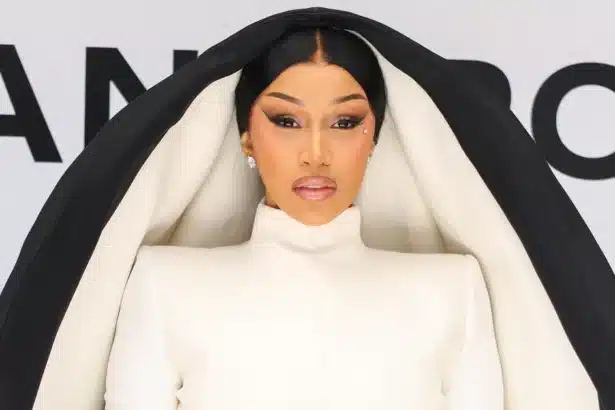
Madonna joined the TikTok trend around ADÉLA’s “Nicole Kidman” by using the song in a clip of herself posing in a gold dress. The video arrived after the track had already reached the US top ten and found an audience making short performances of their own. Nicole Kidman herself was among the people who had already responded to the song online.
In the TikTok clip Madonna posted, a gold dress does much of the work. She turns the preparation for a night out into a short performance, posing while ADÉLA’s “Nicole Kidman” plays underneath. A song built around the name of a film star is a fitting choice for a video in which the look and the person wearing it are the main events.

The footage takes its place in a trend that was well under way by the time she chose the song for her video. ADÉLA had recorded a song with a name viewers could recognise almost as soon as it appeared on a screen. On TikTok, that name offered a prompt as much as a title. People could choose clothes, gestures or a setting that gave their own version of the glamour it suggested, and the song could provide the rest of the scene.
The track comes from “PRIMA,” the Slovak singer’s debut album. The album opened at No. 4 on the Billboard 200 and “Nicole Kidman” reached No. 9 on the Hot 100. The two figures tell different parts of the release story. The first captures the album’s opening position. The second reflects the reach of the song viewers were using to make something short enough to watch between other posts.
Madonna had no role in the recording. What she brings to the trend is a way of using the camera that makes posing look like part of the choreography. The clip depends on how she holds the viewer’s attention as much as it depends on the dress. Her contribution to the song’s circulation is an example of somebody else giving the track a new setting for a few seconds.

The other people who had responded to the trend came from several corners of entertainment. Kesha, Tove Lo and Dua Lipa had taken part. So had Pedro Pascal and Kristen Wiig. A singer might be recognised first from a record, and an actor from a character, but the clips gave each of them the same modest assignment. The appeal lay in seeing what they did with it.
Kidman’s participation gave the trend a different kind of moment. Until then, her name could function as a reference that other people filled in with their own ideas about stardom. When she joined in, viewers could see the person at the centre of the reference responding to it. That made the exchange between ADÉLA’s song and the world it borrowed from unusually direct.
By the time Madonna made her clip, the format had become easy to recognise. The gold dress works within it without a long setup. A shot of someone getting ready can stand in for a whole night out, and a pose can suggest that a camera has arrived even when the viewer only sees the preparation. ADÉLA’s track gives the sequence a sense of occasion that the feed would otherwise supply only for an instant.

The post also fits the way Madonna has used social media to put small pieces of preparation in front of an audience. A look can be shown before an event, apart from whatever happens once she arrives. Here the audio is conspicuous enough to become part of the look. The choice of a newer singer’s track connects a moment constructed around Madonna’s image with a performance viewers elsewhere are making on their own terms.
A TikTok trend gives a record several lives at once. Someone might hear the name “Nicole Kidman” through a celebrity’s post and go looking for the song. Another viewer might already have heard ADÉLA’s album and come to a clip to see what happens when somebody they recognise uses it. Those routes through a release are different from the position a track occupies on a chart.

There is no indication in Madonna’s video of a new recording with ADÉLA. The connection is in the clip itself. It offers a quick version of what had already made the song adaptable: an instantly legible reference and room for another person to put an image against it. The official recording remains the one ADÉLA made for her album.
The video gives Madonna a few seconds to lean into the theatricality of getting dressed. The gold catches the eye, the camera holds on the pose, and the song supplies the name the audience hears against it. In a trend that has already had its namesake step into the frame, this is a turn someone else has taken in front of the camera.