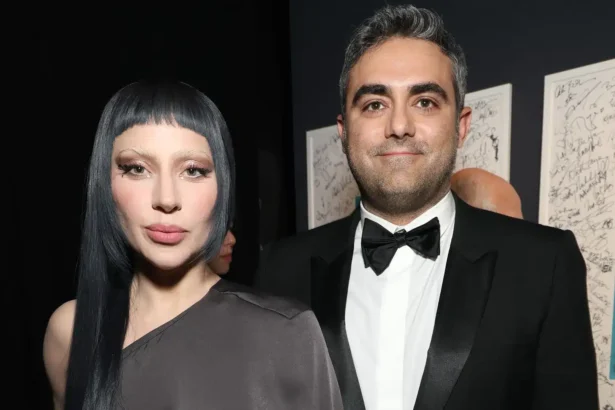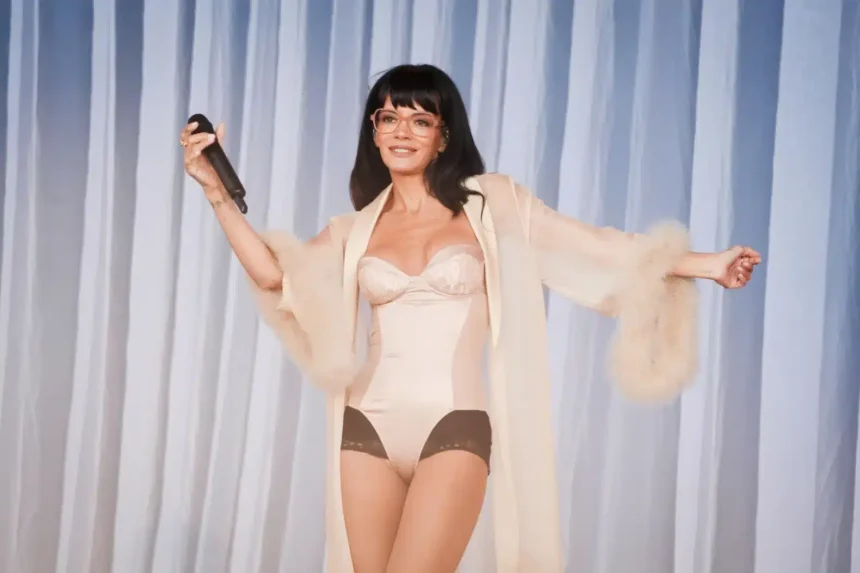
Lily Allen introduced “Love, Lily,” a six-piece sexual wellness collection with Lovehoney, on October 20, 2026. In discussing the collaboration, the singer recalled how fear of being left had once made it difficult to put her own needs first. One item in the range also carries a reference to “Pussy Palace,” a song from her 2025 album “West End Girl.”
The blue polka dots on one item in the “Love, Lily” collection come from a story Lily Allen had already put on record. In “Pussy Palace,” the narrator discovers a bag containing intimate products. The image had previously inspired a piece of merchandise for fans. With Lovehoney, Allen brought the pattern back, this time as a design on one of six products she selected for the range.

The singer used the launch to talk about a far less visible part of her past. She recalled putting her partners’ pleasure before her own and treating their satisfaction as a way to feel secure in a relationship. The possibility that someone might leave weighed on what she was prepared to say. It could seem easier to go along with what another person wanted than to explain what she wanted herself.
Lily Allen described that instinct as something she had come to recognise over time. She also said she thought other women might see themselves in it. Her account was personal, and her wider point concerned the difficulty of speaking up when a relationship feels uncertain. Telling someone that a preference is different, or that an experience has been disappointing, takes on a different weight when a person already feels afraid of losing them.
In her telling, understanding her body better gradually changed those conversations. Knowing what she wanted gave her something clearer to ask for. She described the change as freeing and said she hoped talking about it in public would make the subject easier for other people to raise. That was the part of the discussion she could speak about from experience, after years in which she had often done the opposite.

The collaboration took shape while she was touring “West End Girl,” which came out in October 2025. Lily Allen spent much of that period in hotels. She tested products and made her selection while she was away from home. Lovehoney marketing director Steve Thompson said the singer tried different items and chose the ones that suited her preferences. The finished range includes individual devices and a calendar with items stored in separate compartments.
Allen’s association with the company goes back further than the current tour. She remembered being given a box of products in 2014, when she was performing at the London Palladium during the “Sheezus” period. She wanted to charge everything before heading out to the show and ran out of available sockets. She began unplugging equipment around the room to make space.
The lamps, television and even the phone came out of their sockets in her telling. By the time Lily Allen had finished, the small lights on the devices were blinking in a room she had made almost entirely dark. It was the sort of early encounter she could tell as a comic story, with the ordinary inconvenience of a hotel room supplying most of the scene.

She talked about sexuality in her 2018 memoir, “My Thoughts Exactly,” and worked with Womanizer on a product in 2020. She also remembered sending products to people she knew and receiving messages about how much of a difference she had made. Her first assumption was that the messages were about her music. It took a moment for her to realise that the people writing were thanking her for the things she had sent them.
On “West End Girl,” Lily Allen put infidelity, disappointment and desire into songs written from inside a relationship she was trying to understand. The detail in “Pussy Palace” works because it is an object the narrator can actually pick up and look at. The blue polka dots give that episode a second life outside the recording. Listeners who know the album are likely to recognise why that item, among the six in the range, has a design of its own.

Allen also brought up the demands that can make it easy to give personal needs a lower priority, including work and caring for a family. Her comments kept returning to the point at which a person has to say something out loud. Putting a desire into words can feel awkward even in a stable relationship. For someone who associates disagreement with the prospect of being left, the conversation can feel harder still.
Lily Allen now speaks of understanding what she wants as part of what lets her communicate it. That is where her description of the collection leads back to the interview: a public product launch gave her an occasion to revisit something she once found difficult to say to one person.