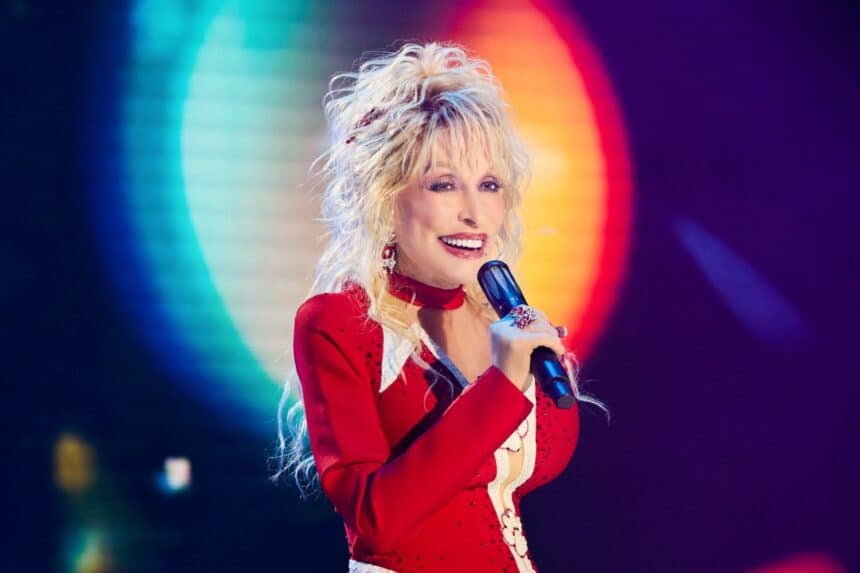
Dolly Parton’s final known vocal recording has been officially released on “Torn,” a duet with Bono and U2 that appears on the band’s new album Carnaval De Luz. Recorded in Nashville in June 2026, just months before her death, the song marks the country icon’s last documented studio vocal performance. Released on November 13, it arrives in three versions, including alternate treatments by Kent Wells and T Bone Burnett, offering different interpretations of the same deeply personal composition.
Dolly Parton can be heard alongside Bono on “Torn,” the closing track of U2’s newly released album Carnaval De Luz. Arriving on November 13, 2026, the collaboration carries particular significance: it contains the final known vocal performance the country singer recorded before her death on August 25 at the age of 80.
The song is available in three versions. Alongside the original album recording, listeners can hear the “Kent Wells Version” and the “T Bone Burnett Take,” two alternative treatments that place different musical emphasis on the collaboration while retaining the singer’s distinctive vocals.

At its center is a duet between Parton and Bono, bringing together two performers whose careers developed in different musical traditions. The song leans toward country, with a restrained arrangement that allows its central story of family division and emotional conflict to remain prominent.
“Torn” explores relationships damaged by opposing beliefs and disputes that seem impossible to resolve. Its narrative centers on a family pulled apart by conflicting loyalties, including brothers becoming estranged and a mother caught between people she loves.
Dolly Parton was involved in writing the composition, not simply invited to record an additional vocal part. She shares songwriting credit with U2 and Johnny McDaid of Snow Patrol, while the published credits identify Parton, Bono and McDaid among the lyricists.
Her vocal was recorded in June at Blackbird Studios in Nashville, Tennessee. Longtime collaborator Kent Wells produced the session, with Joel McKenney handling the recording engineering. The performance was completed during what would become the final months of her life.

According to the team involved in the project, Parton also heard and approved the final mix before her death. That detail distinguishes the release from a recording assembled without the artist’s input after she was gone, although the song’s arrival has naturally taken on additional meaning since August.
The album version was produced by Jacknife Lee, a longtime U2 collaborator. Bono and Parton share lead vocals, while The Edge contributes guitar and vocals, Adam Clayton plays bass and Larry Mullen Jr. performs on drums.
Daniel Lanois adds pedal steel guitar, introducing a recognizable country texture into the recording. The instrument also connects the track’s arrangement with the Nashville tradition associated with Parton’s decades-long recording career.
The “Kent Wells Version” offers a more explicitly country-oriented treatment. Wells is credited as co-producer, and the recording includes additional contributions from musicians playing acoustic guitar, electric guitar, steel guitar, percussion, bass and keyboards.
That version received a country radio premiere on November 12, one day before the digital release. Stations and broadcast networks across the United States introduced the recording ahead of its wider availability, with Big Machine Records supporting its country radio campaign.

A third recording, the “T Bone Burnett Take,” provides another interpretation from the acclaimed producer and musician. Rather than presenting a separate newly recorded performance by Parton, it offers an alternative treatment of material stemming from the same final vocal session.
Together, the three releases allow listeners to compare how different production approaches can reshape a single composition. The differences are especially relevant to a song built around two contrasting voices and a story that moves between personal affection and unresolved family conflict.
Bono had previously spoken about how difficult it had become to listen to the recording following Parton’s death. In an interview published before the song’s release, he recalled how much effort she had made to sing while experiencing health difficulties and expressed admiration for the performance she delivered.
His comments were made ahead of November 13 and should not be mistaken for a new reaction to the finished release. They do, however, provide context for the recording’s emotional significance to those who worked on it.
“Torn” closes Carnaval De Luz, U2’s sixteenth studio album and first collection of entirely new material in nine years. The standard edition contains twelve tracks, produced by Jacknife Lee, and arrives during the band’s fiftieth anniversary year.

The album also connects with Days of Ash and Easter Lily, two EPs released earlier in 2026. Within the expanded presentation of these projects, “Torn” serves as a musical bridge between the different releases and the themes they explore.
For Dolly Parton, the song is described as her final known studio vocal recording rather than necessarily the last piece of music that will ever be released under her name. Previously recorded, unreleased material could still emerge in the future.
With Carnaval De Luz now available, listeners can hear the duet in its intended album setting or explore both alternate versions separately. The three recordings preserve the final known vocal session of Dolly Parton, including the performance she completed in Nashville and approved before her death.