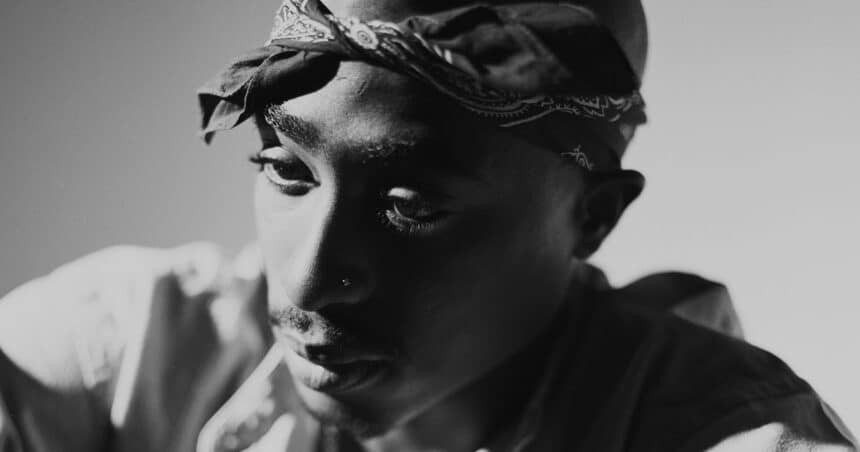
Tupac Shakur will be heard in previously unreleased portions of a 1996 interview when The Tupac Tapes with Angie Martinez premieres on Netflix on November 27, 2026. Martinez recorded the conversation at his Los Angeles home months before his death but withheld much of it, fearing that certain remarks could intensify tensions within hip-hop. Thirty years later, the four-part video podcast will revisit the recordings with new interviews and historical context.
In 1996, Tupac Shakur invited New York radio host Angie Martinez to his home in Los Angeles for a conversation he wanted the public to hear. The interview took place during an increasingly volatile period in hip-hop, when disputes between figures associated with the East and West Coasts were receiving intense media attention. Much of what they discussed never reached the airwaves.
Now Martinez is preparing to release the material she withheld, nearly three decades after recording it. The Tupac Tapes with Angie Martinez will premiere on Netflix on November 27 as a four-part video podcast, combining the archival interview with new conversations about the rapper and the circumstances surrounding his words.

Netflix announced the project on November 11 and released an official trailer. The series is intended to examine both the original discussion and Martinez’s decision to keep portions of it private, placing the recordings within the wider story of hip-hop during the mid-1990s.
Their meeting began with a request from the musician. He had approached Martinez about appearing in the music video for “I Ain’t Mad at Cha,” but she felt uncomfortable accepting because of the tensions surrounding him, particularly in New York.
During their initial exchange, Tupac Shakur told her that his disagreements were not directed at everyone on the East Coast. Martinez, then working at Hot 97, believed that distinction was important enough to explore in an interview. He subsequently invited her to visit his home in California.
She has described his welcome as unexpectedly warm. He arranged to have New York pizza waiting for her, a small gesture that stood in contrast to the intensity of their discussion. Martinez remembers him moving between humor, anger and personal reflection as he spoke about the pressures he was experiencing.

Back at the radio station, she faced a difficult editorial decision. Some remarks seemed capable of damaging relationships or worsening an already dangerous situation. That was her assessment of the possible consequences, rather than a conclusion that can now be established as fact.
Martinez chose to broadcast selected passages, particularly those in which the rapper clarified his position toward the East Coast. The more inflammatory sections remained unreleased. This means the interview was never entirely unknown; the new material consists of the portions audiences did not hear at the time.
She recalls working in the station’s editing room, physically cutting recording tape with a razor blade as she decided what could responsibly go on air. Those choices were made before anyone involved could have known how soon the circumstances surrounding the interview would change.
Tupac Shakur died on September 13, 1996, at the age of 25, six days after being shot in Las Vegas. Martinez was broadcasting on Hot 97 when news of his death arrived and had to share it with listeners. She has described that moment as one of the most emotional experiences of her career.

His death gave the unreleased recordings a different significance. Martinez felt uncomfortable allowing a conversation recorded during a particularly intense period to become what audiences might interpret as his final public statement, especially when he was no longer alive to provide further explanation.
Over the following decades, she continued to keep the material in her possession. Eventually, her thinking changed. She came to regard the recordings as part of hip-hop history and recognized that they could be presented alongside the historical perspective she felt was missing in 1996.
That decision shapes the format of the Netflix production. Martinez will be joined by people who experienced the period from different positions within music, radio and hip-hop culture, allowing the original exchange to be considered alongside other memories and interpretations.
Confirmed guests include RZA, Joe Budden, Charlamagne Tha God, Big Boy, Dream Hampton, Monie Love and Wallo. Their involvement is designed to provide context rather than simply react to the most confrontational excerpts. Martinez has said she wanted participants who could offer distinct perspectives instead of repeating familiar accounts.

The trailer contains archival audio in which Tupac Shakur speaks forcefully about his standing in hip-hop and questions the support he believed he was receiving. The excerpts offer an indication of the interview’s tone, but they do not establish the full content of the upcoming series.
Martinez has also reflected on how differently she hears the recording today. Listening back, she recognizes the young man behind the public persona, including moments of frustration and vulnerability. She has acknowledged that some of his comments remain uncomfortable and that she might ask different questions if conducting the interview now.
The series has not been announced as a new investigation into the rapper’s murder, and there is no verified indication that the withheld tapes contain new evidence about the killing. Netflix is presenting the project as an examination of the interview, its cultural setting and the choices made by the person who recorded it.
When The Tupac Tapes with Angie Martinez arrives on November 27, audiences will finally be able to hear material that remained outside the original broadcast for 30 years. The four episodes will also explain why Martinez kept those recordings private and what led her to share them now.