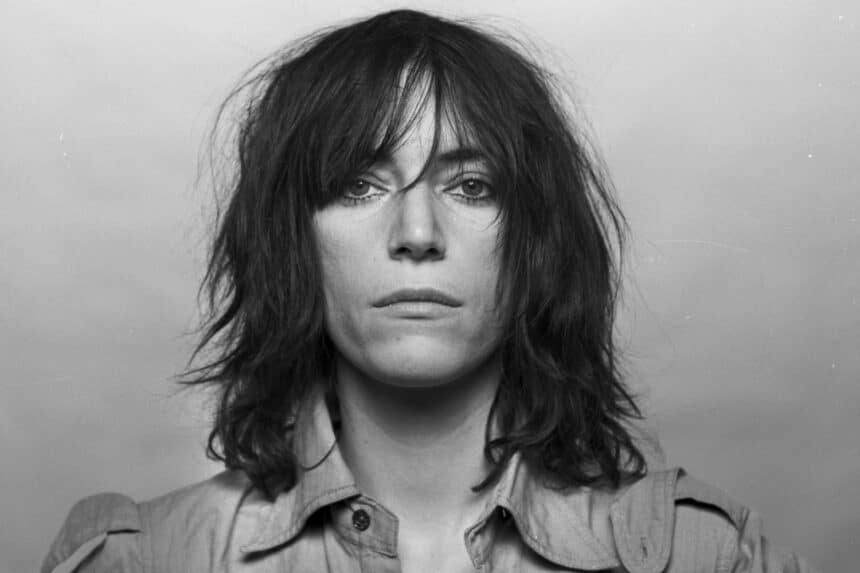
Patti Smith described her forthcoming book The Melting as perhaps 22 percent true during a November 5 conversation at New York’s Cherry Lane Theatre. The book follows M Train and Year of the Monkey in an informal trilogy and draws on a piece she began during the pandemic. Smith said it will bring a mystical approach to climate change alongside elements of autobiography and fiction.
Patti Smith reached for percentages when she tried to explain the kind of book she was finishing. M Train, she suggested, was roughly three-quarters true. Year of the Monkey might have been a little more than half. For The Melting she offered a much smaller number, 22 percent, with the qualification that even this was an estimate. The arithmetic was playful, but the direction was clear: each of the three books makes more room for invention.

She was speaking with the novelist Nelio Biedermann at the Cherry Lane Theatre in New York on November 5. Their conversation was part of the theatre’s BookTalk series and brought together writers with books at different stages of their lives. Smith was still discussing Bread of Angels, published in 2025, and could describe what it had taken to finish it. The Melting was the work still open in front of her.
Readers have already seen an earlier form of the project. Patti Smith began a piece of prose called The Melting during the pandemic and published it in instalments on her Substack. The serial gave her a place to work with a title and a developing idea over time. The forthcoming book brings that work into a different form, at a point when she said she was approaching the end of the editing.

Smith has placed the book after M Train and Year of the Monkey. The first followed a writer moving through places, books and memories that had acquired a personal weight. The second made room for encounters and images whose status can be harder to settle. By calling the new book the third part of that sequence, she gave readers some sense of how to approach it before giving them a publication date or a detailed account of what happens.
The percentages she used at the theatre say something about how Patti Smith thinks of the person telling those stories. A writer can use details from her life while letting the figure on the page move through situations the author did not experience. That freedom is part of the attraction of autofiction for Smith. The book can begin in something she recognises and let it lead her into territory where she is free to change the terms.
Smith used the word “irresponsible” to describe the new work, with the same humour that accompanied the estimate of its truth content. In the context of the conversation, the word pointed to permission she was giving herself as a writer. Someone reading an account as memoir may expect an event to have happened as described. The Melting will ask its audience to spend more time in the uncertainty between what a writer remembers and what she makes from it.

Climate change is one of the subjects she did identify. Patti Smith described her approach as mystical. That leaves the idea broad enough to fit a book she has been reluctant to explain in full. The title can point towards a physical change in the world, while the method she described leaves room for whatever forms that change might take in a fictional or dreamlike account.
The discussion of Bread of Angels gave her another way to talk about the process. Smith explained that the book changed shape while she was working on it. Readers have the published result, but she can remember earlier forms and decisions that sent the work in a new direction. At the same event, Biedermann talked about his 2026 novel Lázár, providing a second example of a writer describing a finished book alongside the work of making it.
For Patti Smith, the three books starting with M Train have given her a place to keep changing the distance between the author and the narrator. The Melting is far enough along for her to describe its place in that sequence and name one of its central concerns. She did not supply a release date or outline the story. The serial is the earlier version readers can turn to while the book itself is being completed.

Her estimate from the stage offers a guide to what she wants the next book to be allowed to do. The number was deliberately precise for something she was unwilling to measure precisely. It was also the detail that made the difference between the three books easy to hear in a room. Patti Smith was willing to talk about where the work had come from and what preoccupied her, then leave much of what she had imagined to the page.