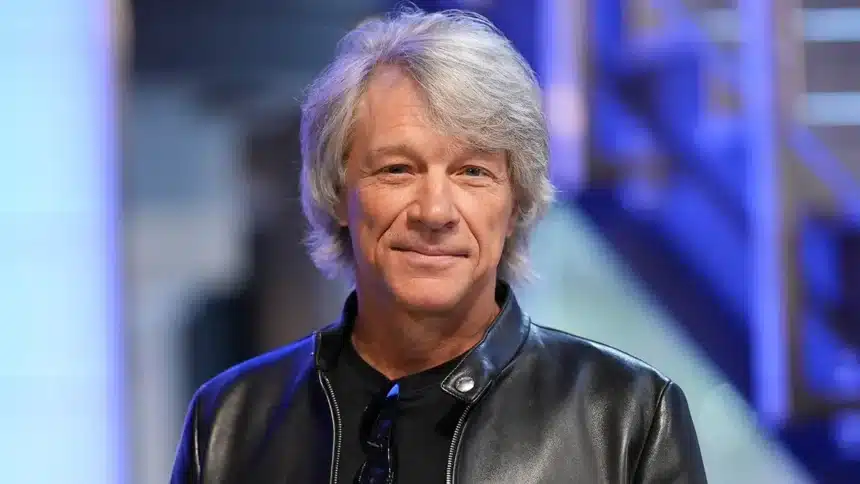
Jon Bon Jovi has recalled a period when his vocal difficulties were so severe that he could not sing even Happy Birthday. In an October 20, 2026, interview, he described the four years of recovery following surgery on his vocal cords in 2022. He now says his voice is in excellent condition and that he is enjoying performing again after a demanding return to touring.
Jon Bon Jovi remembers a time when even the simplest song felt beyond reach. Speaking about his vocal difficulties, the sixty-four-year-old singer said he had once been unable to manage Happy Birthday. For a performer who had spent decades leading a band onstage, that experience changed both everyday life and the way he thought about the possibility of returning to full concerts.

In an Australian television interview on October 20, he revisited the years following vocal surgery in 2022. Progress came more slowly than he had expected. There was improvement, but the small steps made it difficult to see when he would be able to meet the demands of a complete show. Recovery involved patience as well as the practical work of training his voice.
He said he never abandoned faith in the effort, although knowing the full timeline at the beginning might have made the prospect feel different. Had a doctor told him it would take four years, he suggested, he might have considered walking away. Jon Bon Jovi was describing a hypothetical reaction to that long wait, rather than announcing a retirement decision he had actually made.
The 2022 operation addressed a problem affecting one of his vocal cords. Years of work with specialists and regular exercises followed. The goal was more demanding than producing a handful of correct notes. He needed the endurance, stability and confidence to deliver songs over the course of an evening in front of thousands of people who knew the band's repertoire well.

He did not want ticket demand to determine the timing of the return. Jon Bon Jovi said he was unwilling to rely on repeatedly pointing the microphone toward the audience because he could not complete the songs himself. Participation from a crowd is a familiar part of live music, but using it as a substitute for his own ability was not a standard he would accept.
That position led him to turn down touring proposals before he felt ready. Promoter Paul Dainty had prepared plans more than once, he explained, but the singer declined to proceed. Even when others believed the voice was good enough, his own assessment was that it needed more time. Part of the four-year interval therefore reflected a deliberate decision to keep working rather than return too soon.
His anxiety about singing had begun before surgery. Jon Bon Jovi recalled gripping the microphone during performances in 2019 and 2022 while concentrating on each note. Instead of focusing on the story of a song and the exchange with the crowd, he was repeatedly asking himself whether he would manage the next phrase. The experience made performing less satisfying.
One memory involved coming offstage in Nashville and telling his wife, Dorothea, that he thought he had sung reasonably well. She disagreed. He described that honesty without resentment, recognizing the difference between how a performance felt from inside it and how it sounded to another listener. Her response became part of his account of understanding the seriousness of the problem.

His description of the present is much more positive. Jon Bon Jovi called his voice excellent and said he could go onstage that very evening. That is his own assessment, informed by recent concert experience. The change he values most is the ability to sing without consciously checking every note, allowing him to reconnect with the pleasure of the performance itself.
The band returned to major shows in 2026 with nine appearances at New York's Madison Square Garden, followed by Edinburgh, Dublin and London. Three Wembley Stadium concerts formed part of that run, which concluded in September. Those demanding settings gave the singer sustained experience of performing again, beyond the more limited test of a rehearsal room or a short appearance.
By the end of the Wembley shows, he said, he wanted the freedom to choose material from across the band's recording history. Jon Bon Jovi referred to eighteen albums when describing the range he hoped to draw upon. Being able to include songs beyond the biggest hits, without avoiding them because of vocal limitations, was an important measure of progress.

He has also acknowledged the support of David Bryan, Everett Bradley, Hugh McDonald, John Shanks, Tico Torres and Phil X throughout the wait. The recovery affected the entire band's plans. Seven additional Forever Tour shows were announced on October 19 for 2027, covering Australia, London and North America. For the singer, however, the most meaningful change remains the confidence and enjoyment he now describes when the music begins. The newly announced itinerary begins in Melbourne on March 4 and continues in Sydney on March 11. London follows on June 24, before July dates in New Jersey, Chicago and Massachusetts and an August 4 appearance in Toronto. Those plans are separate from his reflections on recovery, although they provide a practical setting for the next phase of performing.
IMAGE_CREDIT: Lester Cohen/Getty Images