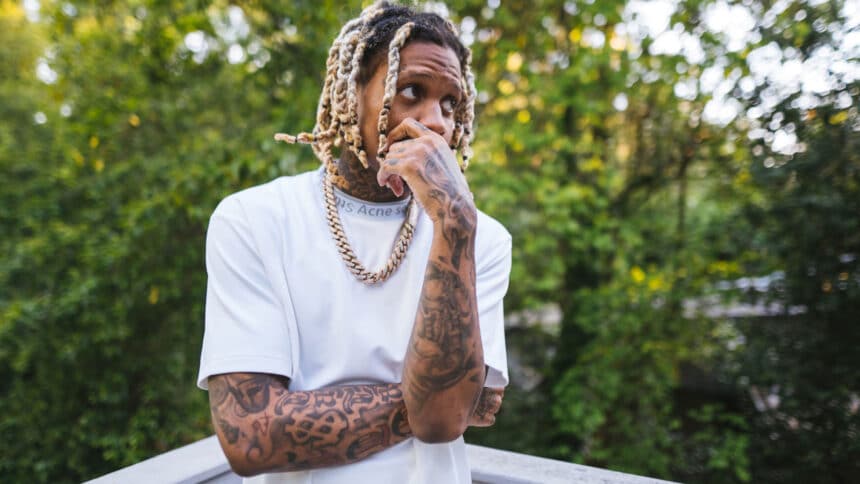
Lil Durk remains in custody after a Los Angeles judge heard arguments on November 4 over his request for release before a second federal trial. His lawyers proposed putting future music earnings at risk, while prosecutors argued that he could flee. The hearing followed his September acquittal in a murder-for-hire trial, but ended without an immediate ruling on the new bail application.
Lil Durk is still waiting to learn whether he can leave custody following his latest bail hearing in Los Angeles. On November 4, US District Judge Michael W. Fitzgerald considered arguments from the rapper's defense team and federal prosecutors, then reserved his decision. A written ruling is expected, but no specific date was announced at the hearing.

The application comes nearly two months after a jury acquitted Lil Durk, whose legal name is Durk Banks, of all charges in his first federal trial. That verdict did not resolve the separate counts he still faces. The remaining proceedings, involving alleged violence in aid of racketeering and related firearms charges, are scheduled for another trial in August 2027.
Fitzgerald's immediate task was to assess whether circumstances had changed enough since the acquittal to justify release while those proceedings remain pending. Much of the discussion concerned flight risk: whether Banks would attend the next trial or attempt to leave the United States. The two sides offered sharply different assessments of the incentives created by the earlier verdict.
The judge raised the musician's attempted travel to Dubai before his 2024 arrest, an episode prosecutors have cited in opposing bail. The defense disputed the weight that should be given to that conduct now. A past attempt to travel, the lawyers argued, must be considered alongside what has happened since, including the jury's rejection of the first set of charges.

For Lil Durk, the defense said, the acquittal provides a reason to trust the courts and seek the same outcome in a second trial. Attorney Drew Findling argued that his client has already seen how the judicial process works and has every incentive to appear before another jury. His position was that the verdict materially changes the assessment of possible flight.
Financial guarantees were central to the proposed release package. Banks' lawyers offered to put his future music income, including royalties and other professional earnings, at risk if he violated the conditions. Attorney Christy O'Connor argued that such an arrangement would make any decision to break the rules exceptionally costly for a performer whose livelihood depends on his continuing career.
The proposal also included an offer from Sony Music Entertainment to provide an appearance bond of up to $1 million, together with family property commitments. These assurances were presented as practical reasons for the court to believe that Banks would comply with release conditions. They remained a proposal for the judge to evaluate, rather than an approved route out of custody.
The defense has also submitted letters supporting Lil Durk from figures in the music industry, including Jay-Z and J. Cole. Those letters predated the November 4 hearing. They were offered as evidence of personal and professional support, not as a legal substitute for bail conditions or as a new development announced during the hearing itself.

Federal prosecutors opposed release. Prosecutor Daniel Weiner argued that Banks might leave for a country without an extradition agreement with the United States. He maintained that the potential loss of existing earnings would not necessarily prevent that outcome, suggesting that the musician could continue recording abroad and generate fresh income outside the financial arrangements proposed by his attorneys.
Those statements were prosecution arguments about possible future conduct. They were not findings that Lil Durk had decided to flee. Fitzgerald must weigh the competing assessments, the proposed guarantees and the effect of the acquittal before issuing a ruling. The hearing itself did not establish a new violation by Banks or conclude the pending criminal proceedings.
The first trial concerned an alleged plot targeting rapper Quando Rondo in Los Angeles in 2022. Rondo survived the shooting, but his cousin Saviay'a Robinson, known as Lul Pab, was killed. Prosecutors had alleged that the attack was connected to the 2020 death of King Von. The September 11 verdict cleared Banks of the charges considered in that trial.
The remaining case involves allegations under VICAR, the federal law addressing violent crimes in aid of racketeering activity. Prosecutors allege that the Only the Family collective, or OTF, was used for criminal activity. Banks denies wrongdoing. Those allegations have not been proved against him in the second trial, and his acquittal must be distinguished from the unresolved counts.

The prosecution's case also refers to alleged violent incidents in Atlanta in 2019 and Chicago in 2022. Attorneys for Lil Durk contest the legal basis for the remaining charges and have raised double-jeopardy arguments concerning the use of matters addressed in the earlier trial. Those objections require further written arguments and judicial decisions rather than an assumption that the second case is already resolved.
The next trial is set for August 30, 2027, after being moved from October 2026 to allow additional preparation in the complex case. Until Fitzgerald issues his written bail decision, Lil Durk remains detained. The absence of an immediate ruling at the November hearing means his request is still awaiting a decision, rather than having been denied that day.
IMAGE_CREDIT: Gilbert Flores/Variety