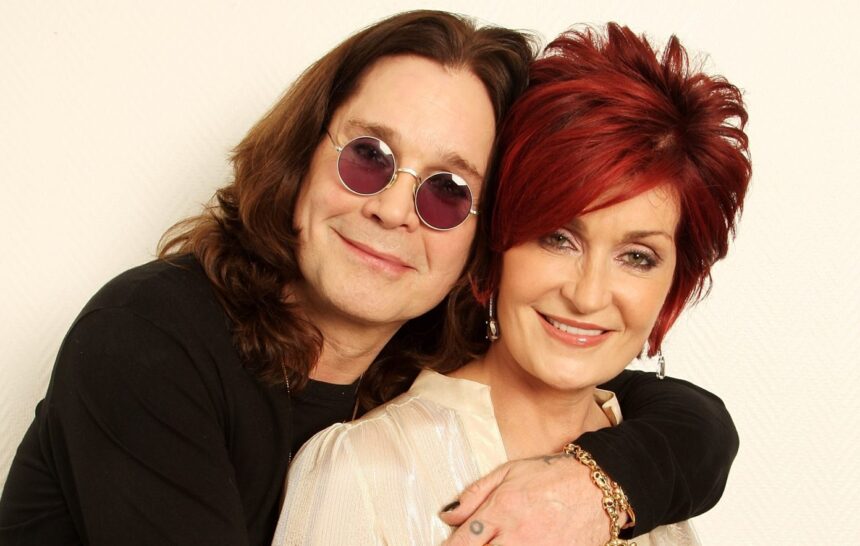
Sharon Osbourne says watching Ozzy in “Back to the Beginning” remains emotionally difficult, particularly when close-ups reveal every expression from his final concert. She initially could not review the early edits and asked their son Jack to take over. The film opened in cinemas on October 28, 2026, documenting the Villa Park farewell performed just 17 days before the singer’s death in July 2025.
Sharon Osbourne watched several versions of “Back to the Beginning” as the film of Ozzy’s final concert took shape. Early in production, however, the task was beyond what she could manage emotionally. She asked their son Jack Osbourne to review the cuts instead, and says seeing her husband on a cinema screen is still a deeply charged experience.
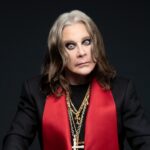
The scale of that image makes it different from an ordinary concert video. Close-ups reveal small changes in Ozzy’s face and eyes that she recognises immediately. Watching those details brings back the man with whom she shared her life, while also recalling how fragile his health had become by the time he made the appearance.
Sharon Osbourne remembers pain and breathing difficulties during that period. Her admiration concerns the effort required to complete the show, something she understands from being alongside him away from public view. The film records movements and reactions onstage, while she sees them with knowledge of the difficulties behind that final public performance.
The concert took place on July 5, 2025, at Birmingham’s Villa Park. Ozzy gave his final solo performance and reunited with Tony Iommi, Geezer Butler and Bill Ward as Black Sabbath’s original lineup. Metallica, Guns N’ Roses, Tool, Slayer and Pantera were among the participating acts. He died on July 22, aged 76.
His participation was uncertain almost until the event. Sharon Osbourne recalls periods when he doubted he could manage it and told her so. He nevertheless remained determined to say goodbye to the people who had followed him for decades, continuing towards the appearance despite the possibility that his condition might prevent it from happening.
According to her account, British doctors warned him approximately two weeks beforehand that the effort might put his life in immediate danger, including the possibility of a fatal cardiac event. That is her description of those medical discussions. It does not establish that performing the concert caused his death 17 days later, and the two should not be presented as a proven causal sequence.
Ozzy had Parkinson’s disease, emphysema and other serious health problems. In his wife’s account, he understood the severity and did not believe cancellation would necessarily provide a long period of good health. Sharon Osbourne accepted his wish to perform despite her concerns. He appeared on a specially adapted throne, rising from below the stage because his mobility was limited.
He had also used a seated presentation at his 2024 solo Rock & Roll Hall of Fame induction. At Villa Park, his wife remembers the happiness accompanying his arrival and the musicians who had travelled to join him. She says that joy continued after the concert into his final days, making the farewell a meeting he had deeply wanted to experience.
The film began international cinema screenings on October 28, 2026. Director Ben Wainwright-Pearce worked from approximately 200 hours of footage, rather than presenting the full ten-hour Villa Park programme. Tim van Someren directed the live filming with more than 20 cameras, and interviews with participants added another source of material for the finished production.
Sharon Osbourne wanted everyone who gave their time to appear in the film. That instruction complicated the process of shaping long performances into a narrative lasting nearly two and a half hours. The director sought to retain the guests without moving attention away from Ozzy, whose farewell had brought the musicians and audience together.
He chose to distribute Ozzy’s five solo songs through the film instead of keeping them in one uninterrupted section. Returning to the singer between other performances was intended to make viewers feel they spent more time with him. The structure also brings back close-ups and reactions repeatedly, increasing the emotional difficulty of watching for his wife.
For the audience, that recurring presence offers a closer view of the final appearance. For his wife, it repeatedly brings back a day they experienced together while knowing his health was exceptionally vulnerable. The same editing choice can therefore carry different emotional weight for the people watching, even though each sees the same filmed performance.

Some artists recorded fresh interviews after Ozzy’s death, changing the tone of their contributions. Sharon and Jack supplied the final family interviews. Producer Daniel Seligman described the responsibility felt towards them and the work, as the production combined concert performances with memories that had acquired a different weight. Sharon later watched the completed film at its Los Angeles and London premieres.
Home-viewing and soundtrack editions with additional music are scheduled for December 11, 2026, followed by a separate collectors’ edition in April 2027. Sharon Osbourne also confirmed unreleased Ozzy solo recordings intended for his forthcoming biographical film, currently in pre-production. That is a different project from the concert document, whose images continue to recall both his doubts beforehand and his happiness at completing the farewell.