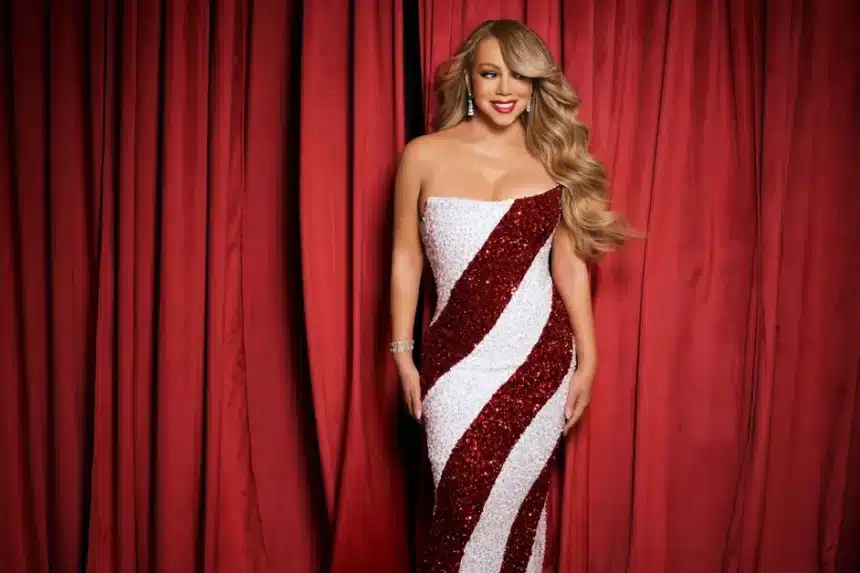
Mariah Carey is marking 25 years of “Glitter” with a digital deluxe edition released on October 30, 2026. The 27-track collection pairs the original album’s 12 songs with 15 additional recordings, including alternate vocals, demos, live material and remixes. Its extras offer different views of familiar songs, from the original “Loverboy” arrangement to newer collaborations, rather than constituting 15 entirely new compositions.
Mariah Carey has released “Glitter (Deluxe Edition)”, expanding the album first heard in 2001 with recordings from different stages of its history. Available digitally from October 30, the collection contains 27 tracks: the original 12-song album and 15 additions. It arrives two months after the reissue announcement, making the promised alternate performances and archive material available together. Those recordings span several different kinds of material.

One prominent inclusion is “Loverboy (Firecracker – Original Version)”. This arrangement used a sample of Martin Denny’s “Firecracker”, also familiar through Yellow Magic Orchestra’s version. It differs from the recording ultimately released as the album’s first single, which drew on Cameo’s “Candy”. The collection places two approaches to the same song within reach of listeners.
The sample change has long attracted attention among fans, becoming part of the discussion surrounding that period of her career. Here, the interest can turn directly to the recording itself. Mariah Carey’s original arrangement can be heard beside the final version, rather than existing only as a detail in an account of what happened during the album’s preparation.
The anniversary release also includes “Loverboy” mixes by MJ Cole and Club of Love. These add further treatments of a song already central to the album’s identity. The different recordings give the second part of the collection a range of perspectives, moving between an earlier arrangement and subsequent reworkings instead of repeating only the familiar final master.

“Out Here on My Own” brings another archived performance into the set. Carey recorded her interpretation of the song Irene Cara sang in “Fame” during the “Glitter” era, but it did not appear on the original album. The collection also includes an alternate vocal, offering more than one way to hear how she approached the piece.
For Mariah Carey, these contrasting performances put the voice at the centre of the archive material. Listeners can compare choices within the same song instead of simply moving from one composition to another. That emphasis continues through other selections, where a familiar album track is presented in a form that differs from its original released arrangement.
“Lead the Way” appears in a 1997 version, tracing the song back to a stage before its eventual place on the 2001 album. “Want You” is included with Carey’s voice alone, without Eric Benét’s contribution from the original release. Both offer an alternative view of material listeners may already know through the finished “Glitter” recordings.
An a cappella “All My Life” highlights vocal lines and harmonies, while Channel Tres supplies a new remix of the song. Mariah Carey’s anniversary collection therefore combines archive discoveries with contemporary production work. Its additional tracks are not drawn exclusively from recordings left untouched since 2001; some return to the material through a more recent creative intervention.

“Never Too Far” receives several forms of attention. The collection contains a rough demo and a short excerpt from the writing process, making stages of the song’s development audible. It also adds two versions of “Never Too Far / Hero Medley”, including a collaboration with Westlife, connecting the composition’s beginnings with later forms of presentation.
A live “Glitter” medley from the “Caution Tour” provides another connection with a later period of the singer’s career. Rather than being confined to the original release era, the anniversary set follows music from the album into a subsequent concert setting. That performance brings an audience-facing version of the material alongside studio takes and demos.
The Rochelle Jordan collaboration on “Didn’t Mean to Turn You On”, introduced in August, now appears within the complete collection. It brings her voice together with Mariah Carey’s and a contemporary production approach. The version joins the expanded set without replacing the original recording, giving listeners another interpretation within the same overall release.
First issued in September 2001 as the soundtrack to the film of the same name, “Glitter” drew inspiration from 1980s music. Disco, funk, R&B, pop and hip-hop met across its songs, with collaborators including Busta Rhymes, Ludacris, Da Brat and Ja Rule. Its initial reception reflected the surrounding circumstances, but a devoted audience continued to support it over subsequent years.

When announcing the reissue, Mariah Carey said she had once found it difficult to imagine celebrating the album’s 25th anniversary. She described making it with love and care and thanked fans who had kept defending the music. Vinyl editions accompany its return, with a limited pink pressing containing three bonus tracks, while the digital edition offers the fullest selection.
The 27-track digital collection allows the completed album to sit beside different stages of its creation and later life. Rare vocals, older recordings, live performances and new mixes supply the additions. For listeners revisiting “Glitter”, the release opens more of the music from a period often remembered as much for the events around the album as for the songs themselves.