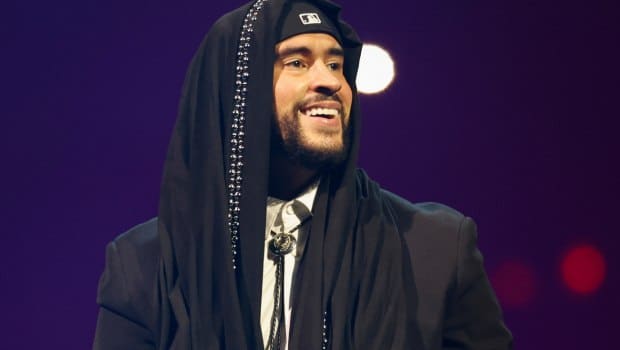
Bad Bunny won Artist of the Year and six additional honors at the 2026 Billboard Latin Music Awards in Miami on October 22. His victories included recognition for touring and international chart performance. Fuerza Regida collected the night's highest total with eight awards, while Karol G, Peso Pluma and Romeo Santos each finished with four, reflecting the range of artists recognized across the ceremony.
Bad Bunny was one of the principal winners at the 2026 Billboard Latin Music Awards, taking Artist of the Year within a seven-award total. The ceremony took place on October 22 at Miami's James L. Knight Center, recognizing commercial performance across Latin music. His results covered several aspects of a career whose reach includes recordings, international charts and major live shows.

In Artist of the Year, he faced Fuerza Regida, Karol G, Peso Pluma and Tito Double P. The category recognizes an artist's overall performance during the awards' eligibility period, rather than a single song or album in isolation. Winning it was the central distinction in his result, even though another act finished the evening with a greater number of awards.
Bad Bunny also received Tour of the Year, reflecting his live activity. His Debí Tirar Más Fotos World Tour had passed $472 million in reported gross revenue and attracted more than three million people in Boxscore figures available by October 22. Those totals provide context for the recognition, connecting an award category with documented concert activity rather than only the success of individual recordings. Bad Bunny's tour is connected with the album Debí Tirar Más Fotos, which places Puerto Rican musical traditions within contemporary production. The concerts extend that material into a live setting for audiences beyond the island.
Another victory came in Global 200 Latin Artist of the Year, which concerns international chart presence. He also won Hot Latin Songs Artist of the Year, Male, and Top Latin Albums Artist of the Year, Male. These categories describe different measurements within the wider result and should not be treated as interchangeable names for the overall Artist of the Year title.

No confirmed appearance or acceptance speech by Bad Bunny was included in the available account of the ceremony. His wins were reported through the announced results. Describing him as a winner does not therefore establish that he stood on the stage to receive each award, and the report supplies no basis for inventing remarks he supposedly made to the audience.
Fuerza Regida led the overall count with eight awards. Marlboro Rojo was central to the group's success, winning Hot Latin Song of the Year and Global 200 Latin Song of the Year among its distinctions. Their results placed regional Mexican music prominently within the evening, showing its presence in both Latin-focused consumption and the broader international rankings.
The group also received the Billboard Vanguard Award, recognizing its role in expanding the audience for Mexican music. That honor has a different purpose from a category determined through chart performance. Including both within the overall account explains why the night's results combine commercial measurements with separate forms of recognition for a broader artistic contribution.

Karol G finished with four awards, including Fan Favorite Artist. The new category was decided by the public, making its selection process different from most of the awards. She prevailed over nominees including Bad Bunny, Fuerza Regida, Peso Pluma and Tito Double P, adding an audience-voted honor to the categories recognizing her presence on the Latin charts.
Peso Pluma also collected four awards after leading the nominations with seventeen entries. A nomination total is distinct from the number of wins, so the result should not be described as seventeen awards. His victories included Regional Mexican Artist of the Year, Solo, while DINASTÍA, made with Tito Double P, received Top Latin Album of the Year.
Romeo Santos joined the four-award group through results associated with tropical music. His collaboration with Prince Royce, Lokita Por Mí, was among the recordings recognized. Together with the regional Mexican and urbano winners, his presence brought another strand of Latin music into the main results, rather than allowing the evening to be defined by one sound alone.

Rosalía received three distinctions, including the Billboard Hall of Fame Award presented by Juan Luis Guerra. She also won Top Latin Pop Album of the Year for LUX and Latin Pop Artist of the Year, Solo. In her speech, she thanked Guerra and expressed gratitude for the Latin American artists and audiences who had influenced and supported her work.
The special honors also included the Billboard Icon Award for Rubén Blades and the Lifetime Achievement Award for Cristian Castro. Burna Boy was recognized as Crossover Artist of the Year. Those results sat alongside forty-seven categories covering Latin pop, regional Mexican, reggaeton, tropical music and other directions, while performers included Carlos Rivera, Manuel Turizo, Nella, Pablo Alborán and Tito Double P.
Most competitive results use commercial measurements from the eligibility period, covering chart dates from September 13, 2025, to September 5, 2026. Depending on the category, those include streaming, sales, airplay and touring. Bad Bunny's seven awards formed one major part of that record, with Fuerza Regida's eight setting the highest total at the October 22 ceremony and the public-voted category following its own separate process.