Mark Ronson has recalled the musical intelligence of Amy Winehouse at a London concert marking twenty years of Back to Black. Speaking at the Roundhouse on October 21, 2026, he praised her extraordinary ability and remembered struggling with the jazz harmonies of Love Is a Losing Game. He then joined Yebba for a restrained performance intended to revisit the way he first heard it.
Amy Winehouse's musicality was at the center of a memory Mark Ronson shared at the Roundhouse on October 21. During the Back to Black anniversary concert, the producer described being impressed by the harmonic sophistication of her writing. His account focused on the musician behind the familiar voice, returning to a composition whose chords had challenged him when she first played it.

The song was Love Is a Losing Game. Before performing it with Yebba, Ronson recalled trying to follow the sequence Winehouse had created and finding its jazz-inflected movement difficult to grasp. He eventually let her play it herself. The story concerned a particular piece and a particular early encounter with it, rather than a general inability to perform her songs.
He used the word monster as an emphatic compliment for the scale of her musical ability. Amy Winehouse, he wanted the audience to understand, had a level of knowledge and instinct beyond the public image associated with her voice and personality. His description came from someone who had worked directly on the sessions and could remember the demands of the material.
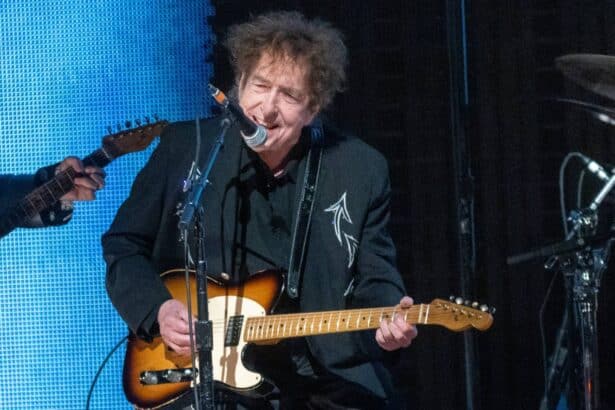
Nearly twenty years later, he took up the guitar again with Yebba singing. The spare arrangement aimed to approach the way Winehouse had initially presented the composition to him. Rather than surround the ballad with a large production, the performance left space for melody, voice and changes of harmony to remain clear, making the remembered musical difficulty part of what the audience heard.

Jazz had been central to her musical development before Back to Black reached an international audience. Frank, released in 2003, reflected influences including Sarah Vaughan and Dinah Washington. Those listening habits and that musical knowledge informed a writing style that did not always follow a straightforward pop progression, helping explain what Ronson found so striking in her chord choices.
Ronson first met Amy Winehouse in New York in March 2006 as she prepared her second album. They discovered a shared enthusiasm for pop and soul from the 1950s and 1960s, discussing older records and the sound she wanted. Those references became part of the recording process that produced songs including Back to Black, Rehab and You Know I'm No Good.
The album was not solely the work of that partnership. Salaam Remi, who had already collaborated with her, was another central producer. Different approaches helped build a record in which older influences met contemporary soul and R&B. Keeping both producers in the account preserves the broader creative history rather than attributing every part of the album to one set of sessions.
Love Is a Losing Game offers a quieter view of that history. Its force rests on harmonic movement, a contained vocal and the relationship between the music and the disappointment in the words. Amy Winehouse did not require a large rhythmic device or an elaborate brass arrangement to make that song expressive, and the anniversary rendition allowed those smaller movements to remain audible.

The Roundhouse setting in Camden carried its own connection with her life and music. Original studio collaborators and longtime musical associates and members of her live band joined a range of singers for the evening. Ronson opened with Corinne Bailey Rae performing Back to Black, while Sasha Keable sang Just Friends, Nia Smith presented Tears Dry on Their Own and Lianne La Havas took on You Know I'm No Good.
Other contributions included Jorja Smith with Some Unholy War, Baby Rose with Wake Up Alone and FLO with He Can Only Hold Her. The different voices offered their own interpretations of songs closely identified with Amy Winehouse. The format did not ask every guest to reproduce one vocal style, instead allowing the compositions to move through contrasting performers.
Ronson also introduced Jessie Reyez before Rehab, praising the rough texture of her voice and the directness of her writing. Those qualities reminded him of the honesty he associated with his former collaborator. The comparison concerned an expressive approach, rather than a claim that the performers were interchangeable or that the concert sought a replacement for the artist being remembered.
The evening closed with the singers returning for Valerie. Although closely connected with Amy Winehouse, the song was not part of the original Back to Black album. Written by the Zutons, it became a recording with Ronson for his 2007 album Version. Its place at the concert therefore extended the tribute beyond the exact contents of the anniversary record.

Released on October 27, 2006, Back to Black led to five Grammy wins in 2008. Winehouse died on July 23, 2011, aged twenty-seven. At the anniversary concert, Ronson said he still found it remarkable to have helped make a record meaning so much to listeners. His guitar performance returned that larger legacy to one precise memory: learning the demanding changes she had first played him.