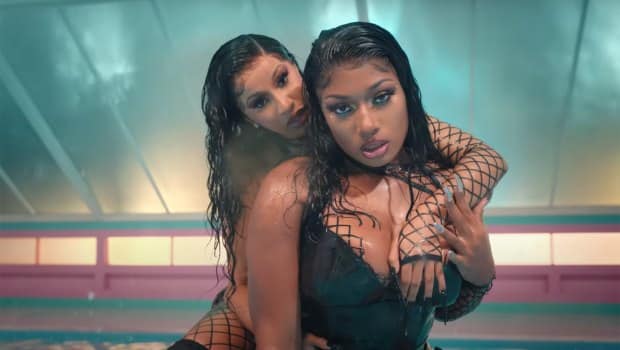
Cardi B has responded to criticism that her lighter skin played a decisive role in her success. Addressing comments by Mona Love, the rapper acknowledged that colorism is real but rejected reducing her career to her appearance. She recalled the rejection, insults and obstacles she faced before becoming famous, arguing that recognition of discrimination should not erase her work or personal experience.
Cardi B remembers a time when people did not see her as a future music star. Before the No. 1 singles and major collaborations, she says they commented on her teeth, acne and braids. Those memories form part of her response to a renewed public discussion about skin tone and opportunity, in which she has sought to defend her own experience while acknowledging discrimination faced by darker-skinned women.

The disagreement followed remarks by Damona “Mona” Love, known for “Don’t Call Me White Girl”. Love argued that the rapper’s lighter skin and Dominican background brought advantages in entertainment, particularly in brand partnerships. The discussion drew on a brief excerpt from a 2024 livestream, prompting Cardi to say that an isolated clip did not represent the full conversation or the position she had expressed during it.
In a lengthy response on X on November 2, Cardi B began by acknowledging colorism: discrimination based on skin shade that often advantages people with lighter skin. She said she had witnessed it herself and had never denied its existence. Her objection concerned how her own career was being explained. She argued that recognising those inequalities should not mean attributing her success solely to one aspect of her appearance.
To explain that distinction, she returned to her early attempts to enter music. Cardi said people judged her looks and her previous work as a stripper before considering her potential as a performer. In her account, she did not fit the image that men or labels regarded as a conventional investment. The insults she recalled were part of a period when she says she repeatedly had to prove she could succeed.

Cardi B described hearing rejection rather than automatic encouragement. She said her skin tone alone had not persuaded industry figures that she could become a star, and that she worked extremely hard to reach her current position. Those are her recollections of her rise. They explain why she feels that a discussion focused narrowly on appearance risks removing the effort, setbacks and persistence from the story she tells about her career.
Love’s argument approached the issue from a different angle. She suggested that an equally talented darker-skinned woman might not receive the same opportunities. Returning to the subject on “The Joe Budden Podcast” on October 31, she acknowledged Cardi’s talent while maintaining that appearance was one factor in the opportunities she received. Her comments addressed wider inequalities in entertainment alongside her assessment of the rapper’s individual success.
The disagreement therefore concerns how to discuss structural advantages alongside a person’s account of working through obstacles. Cardi B explicitly acknowledges discrimination but objects to diminishing the difficulties she experienced. Her response does not ask for the inequalities affecting other women to be ignored. Instead, she argues that her career cannot be adequately explained through skin tone alone, a distinction she returns to throughout the statement.
She also disputed the context of the footage being circulated. According to Cardi, the original conversation with Raymonte Cole lasted around 15 minutes in 2024, whereas the excerpt was only 13 seconds long. She said the short version left out material relevant to what Love was discussing. That is part of her explanation for responding again, rather than evidence that every interpretation of the original exchange has been independently resolved.

Cardi B said she was additionally frustrated because Love had contacted her privately for advice in the past. She questioned why Love had not approached her directly for clarification before making the criticism public. Cardi also alleged that the topic had been revived to divert attention from backlash over Love’s remarks about Tia Kemp. That allegation is Cardi’s account of motive, not an independently established explanation of why Love spoke.
The exchange comes years after Cardi’s commercial breakthrough. “Bodak Yellow” reached No. 1 on the Billboard Hot 100 in 2017, and her debut album “Invasion of Privacy” topped the Billboard 200 and won the Grammy for Best Rap Album. Further major hits included “I Like It”, “WAP” and “Up”. Despite those achievements, she says she still feels required to demonstrate that her value extends beyond appearance and the way she speaks.
Her closing position returns to the distinction with which she began: prejudice exists, and acknowledging it need not diminish her accomplishments or the experiences that shaped them. Cardi B describes the early rejection and her current public image as parts of the same continuing need to defend her work. The statement ends by asking that the wider reality of discrimination be recognised alongside, rather than in place of, that personal history.